KEY IDEAS:
- Public safety agencies face fragmented data, siloed systems, and workflows that limit real-time visibility and coordination.
- A single, configurable data integration platform unifies data across systems while adapting to each agency’s needs.
- Data integration helps agencies streamline operations, enable secure data sharing, and support mission-specific workflows.
- With unified data, four Florida agencies improved real-time decision-making, collaboration, and service for more than 2.5 million residents.
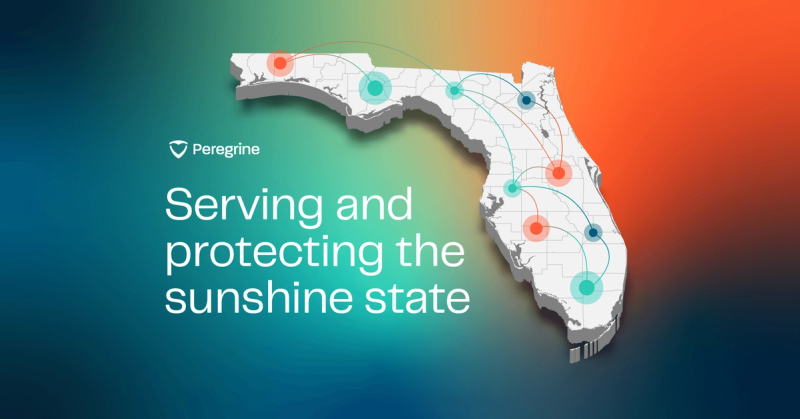
FLORIDA — Every city, county, and state agency faces unique challenges, even in the same region. Just ask any Floridian, and they’ll tell you how different West Palm Beach is from Wesley Chapel.
Public safety agencies across Florida know that just as their residents have different priorities and discrete needs, their communities grapple with different types of crimes and emergencies. So when it comes to data integration and management for Floridian law enforcement, one-size-fits-all software won’t work.
To make full use of their data, four Florida agencies needed a configurable data integration solution that could meet their specific needs. Together, these agencies collectively serve and protect more than 2.5 million Floridians:
- The Palm Beach County Sheriff’s Office
- The Florida Fish and Wildlife Conservation Commission’s Division of Law Enforcement (FWC)
- The Pasco County Sheriff’s Office
- The Manatee County Public Safety Department
These agencies implemented Peregrine to unify their data sources, enhance interagency collaboration, and streamline data sharing without sacrificing security. Keep reading to learn how data integration transforms operations at each agency.
💡 AT A GLANCE: HOW FLORIDA AGENCIES USE UNIFIED DATA FOR DIFFERENT PUBLIC SAFETY OPERATIONS
- The Palm Beach County Sheriff’s Office easily actions data for officers across the agency.
- The Pasco County Sheriff’s Office uses a data integration platform for record consolidation and simple, secure data sharing with neighboring agencies.
- The Florida Fish and Wildlife Conservation Commission integrates, enriches, and harmonizes data that supports conservation efforts.
- For emergency managers in Manatee County, unified data enables safer, more accurate situational awareness from preparation and mitigation to response and recovery.
How configurable data integration supports different public safety missions
To support their diverse needs, public safety agencies require a configurable data integration platform that adapts to different missions. A configurable data integration platform allows public agencies to create workflows that suit their specific operational needs, rather than relying on a one-size-fits-all solution.
READ MORE → Bridging the Gap: Enhancing Disaster Recovery Collaboration Through Data Integration
Agencies need flexible, scalable systems that:
- Unify diverse internal and external data sources
- Allow personnel to create custom dashboards
- Allow personnel to set up specific automated alerts
- Support granular user controls
- Enable secure, real-time data sharing
Modern data integration platforms can be configured to support different operational workflows across agencies.
🔎 WHY DO PUBLIC SAFETY AGENCIES NEED CONFIGURABLE DATA INTEGRATION PLATFORMS?
Public safety agencies have different missions, data sources, and operational workflows, which means a single rigid system cannot meet all their needs. Configurable data platforms allow agencies to adapt technology to their specific requirements while still enabling data sharing and collaboration across organizations.
How the Palm Beach County Sheriff’s Office uses unified data for real-time crime analysis
“We definitely have a lot of data and we’ve been operating with information in silos. The reality is technology can work for you just as easily as it can work against you. We saw Peregrine as an opportunity to work smarter.” —Maj. Paul Vrchota, Palm Beach County Sheriff’s Office
The Palm Beach County Sheriff’s Office (PBSO) serves one of Florida’s largest jurisdictions and relies on unified data to support real-time crime analysis. Protecting Palm Beach County is a significant undertaking:
- According to April 2023 demographic data, Palm Beach County is the fourth largest Florida county by population count.
- In terms of square miles, Palm Beach County is the second largest in the state, as reported by the U.S. Census Bureau.
With so much land and so many people to serve, PBSO uses lots of tech — which produces tons of data.
“We definitely have a lot of data,” said Maj. Paul Vrchota, “and we’ve been operating with information in silos. The reality is technology can work for you just as easily as it can work against you. We saw Peregrine as an opportunity to work smarter.”
Vrchota, who oversees the real-time information center (RTIC), outlined how he plans to leverage Peregrine across PBSO.
Increasing real-time visibility for patrol officers
Deputies in the field will use Peregrine as a single gateway to search multiple sources of data instead of having to log into various disparate databases. Deputies will be faster and better at responding to calls for service, especially when there’s a suspect in the area during an in-progress event.
💡 HOW DOES UNIFIED DATA IMPROVE REAL-TIME OPERATIONS FOR LAW ENFORCEMENT AGENCIES?
- Allows officers and analysts to search across multiple systems in one place
- Helps personnel identify patterns faster and make informed operational decisions
- Provides easy access to up-to-date information during active incidents
- Reduces manual data collection
Surfacing connections for faster investigations
Without data integration, investigators sometimes spend a week’s worth of man-hours combing through databases and reading reports to find the data they need. Peregrine brings all this information into a common operating picture for investigators:
- Peregrine’s Universal Search feature enables investigators to find what they need in seconds
- Peregrine’s technology links data across disparate sources together, surfacing the information investigators need but might not even know to look for.
Enabling faster, more accurate analysis with dynamic dashboards
PBSO covers 20 districts across the county, so the agency must corral and compile data from all of its districts into salient reports for leadership — traditionally a tedious, time-consuming task.
But with Peregrine, dashboards update in real time, pulling in data from multiple sources. Instead of manually collating information, analysts can automate that work in Peregrine and focus their time on more urgent tasks.
CASE STUDY → How Menifee PD Uses Unified Data for Faster Crime Analysis
Maximizing efficiency for real-time crime analysts and dispatchers
Like patrol officers, real-time crime analysts and dispatchers can use Peregrine to find and share accurate and timely information to deputies in the field more quickly, ensuring deputies are safe and prepared.
“Ultimately, real-time crime analysts and dispatchers will use Peregrine to quickly search across PBSO’s systems to find relevant information. It’s about maximizing efficiency,” Vrchota continued. “If we can use the platform to save us hours — operate more quickly, more comprehensively, more accurately — we see the potential for a huge return on our investment.”
🔑 KEY TAKEAWAY: How unified data increases efficiency and safety at Palm Beach County Sheriff’s Office
- Improves real-time visibility
- Accelerates investigations
- Supports patrol operations across a large jurisdiction
How the Pasco County Sheriff’s Office uses unified data for secure interagency collaboration
Pasco County Sheriff’s Office (PSO) serves over 650,000 residents and must coordinate closely with neighboring agencies. However, prior to implementing a data integration platform, PSO faced two fundamental challenges when sharing data with law enforcement partners:
- “Dirty” data, which might be incomplete, duplicative, or redundant
- Data-sharing security concerns, which can slow down interagency collaboration.
To overcome these challenges, PSO and its neighboring agencies onboarded Peregrine as their shared data integration solution. Peregrine:
- Unifies, cleans, and standardizes data to increase accuracy
- Supports fast, secure data sharing between agencies
- Streamlines interagency collaboration on cross-jurisdictional cases
READ MORE → 'Data Is The New Currency:’ Florida Agencies Discuss Emerging Tech, Data Sharing
Cleaning dirty data to surface connections
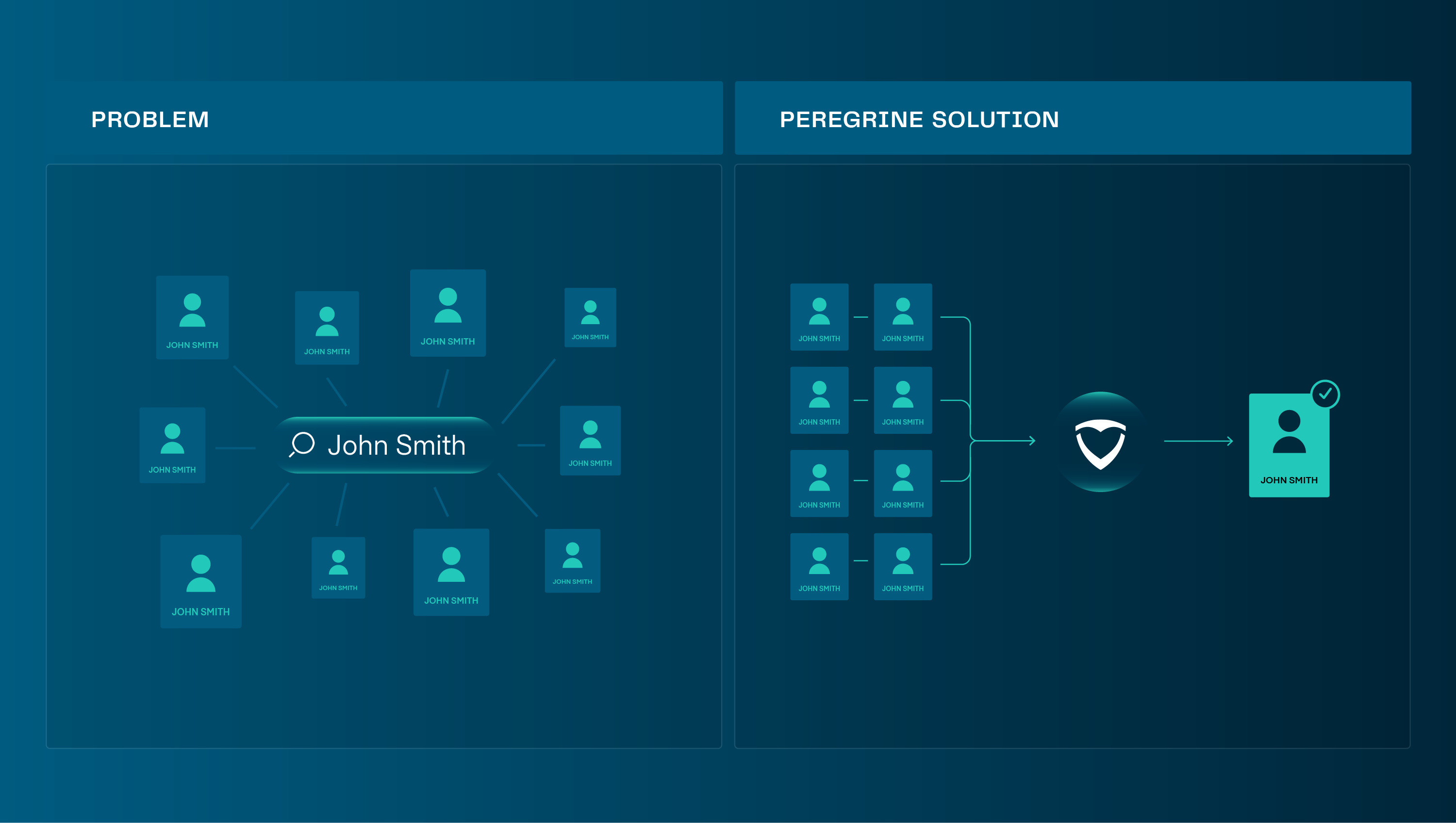
Inaccurate, inconsistent, or incomplete records create roadblocks for investigations. When an investigator searches for a person and finds 40 duplicative records (think: 40 records for the same John Smith), it can be difficult to pinpoint the best record to reference and share with partners at other agencies.
CASE STUDY → How the Concord Police Department Uses Real-Time Data To Solve Cross-Jurisdictional Crime
Peregrine solves for this by merging redundant records into a single combined data asset — so now, there’s only one John Smith record. Instead of manually reviewing multiple entries, PSO personnel can rely on standardized data that surfaces connections between people, locations, and incidents more efficiently.
Streamlining fast, secure data sharing to enhance coordination
When an agency wants to collaborate or share information with its partners, it can do so either digitally or physically. However, both methods can be complex:
- Digital information sharing often requires a long, drawn-out process involving command staff and counsel.
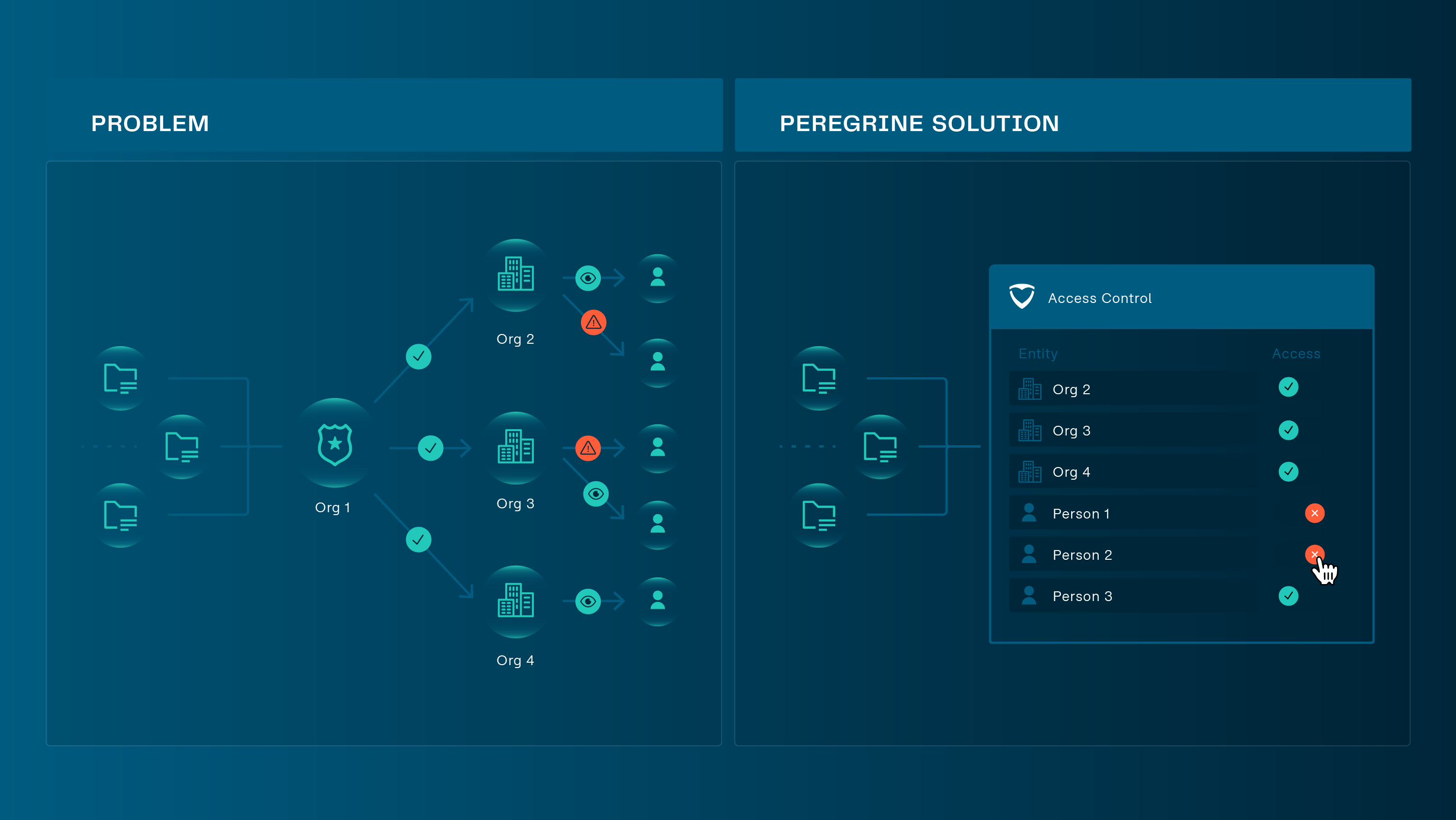
- Digital data sharing presents security concerns: If some personnel aren’t authorized to see certain information in a record, agencies face the onerous process of manually identifying who can see what and redacting information accordingly.
- Physical data sharing may entail driving to the partner’s HQ to collect files in person, which can be a big lift — sometimes literally.
READ MORE → Interagency Data Sharing: Overcoming Barriers To Drive Collaboration
Peregrine streamlines this process with intuitive access controls for fast and easy information sharing:
- Users access powerful access controls right in the Peregrine platform to ensure only those with the appropriate permissions can see and action data.
- Agencies using Peregrine can skip the tedious security process to share information with each other quickly and safely.
This allows PSO and its partners to move from fragmented, manual workflows to a unified system for secure, real-time collaboration.
💡 HOW CAN POLICE AGENCIES SECURELY SHARE DATA ACROSS JURISDICTIONS?
Unified data platforms help agencies share relevant information in real time while protecting sensitive data and ensuring compliance with privacy and security requirements. CJIS-compliant platforms are fully traceable, with granular access controls.
As part of this implementation, neighboring police departments will also have access to Peregrine. These agencies will be able to seamlessly share clean, accurate data with the confidence that their information is secure and civilians’ privacy and civil liberties are protected.
Peregrine’s curated alerting system notifies key personnel across departments when anyone searches for an entity such as a person, car, or place. This lets investigators and analysts in neighboring agencies know when they’re working on related cases so they can collaborate more effectively and optimize their resources.
🔑 KEY TAKEAWAY: PSO uses unified data to standardize records, enable secure data sharing, and improve collaboration on cross-jurisdictional investigations.
How FWC uses unified data to support conservation and law enforcement operations
“Access to data in the field is mission-critical. Peregrine surfaces data from multiple systems that don’t talk to each other with one search in a single pane of glass.” —Charles “Rett” Boyd, assistant executive director of the Florida Fish and Wildlife Conservation Commission
The FWC Division of Law Enforcement has a unique conservation and public safety mission within Florida public safety. With more than 800 sworn officers, the division’s diverse responsibilities include investigating the illegal trafficking of fish and wildlife and enforcing laws to conserve Florida’s wildlife and habitats and regulate the state’s large seafood industry.
FWC officers operate across vast geographic areas and require immediate, mobile access to data to support enforcement decisions in the field. Without a unified platform, officers must manually search across multiple systems that may not function well on mobile devices. The agency implemented Peregrine to provide officers with meaningful, digestible data in the field.
READ MORE → Empowering Patrol Officers With Real-Time, Critical Information
Providing mobile-friendly insights in the field
FWC’s Division of Law Enforcement works with Peregrine to integrate, enrich, and harmonize data from a number of FWC’s systems, including its:
- Records management system (RMS)
- Computer-aided dispatch (CAD) system
- Interstate Wildlife Violator Compact
- Multiple automated license plate recognition (ALPR) systems
This allows officers to quickly access relevant information across systems while operating in the field.
“The fact is, our officers are responsible for 8,000 miles of coastline, 13,000 square miles of offshore waters, and more than 34 million acres of land,” said Charles “Rett” Boyd, assistant executive director of the Florida Fish and Wildlife Conservation Commission. “Access to data in the field is mission-critical. Peregrine surfaces data from multiple systems that don’t talk to each other with one search in a single pane of glass.”
🔑 KEY TAKEAWAY: FWC uses unified data to provide officers with real-time, mobile access to critical information across systems, enabling faster and more informed decisions in the field.
How Manatee County uses unified data for real-time emergency response
“After only a few days, we were able to see Peregrine’s value. They came onsite and quickly developed resources that were helpful during an emergency. … Manatee County residents and first responders alike will be safer thanks to our partnership with Peregrine.” —Mike Rahn, Chair of the Manatee County Board of County Commissioners.
Effective emergency response depends on instant communication and seamless coordination between organizations that have different priorities, skills, and workflows. When collaborating agencies don’t have a shared operational picture, they risk:
- Acting on stale data
- Duplicating efforts
- Missing emerging trends
Four days after finalizing our agreement with the Manatee County Public Safety Department, Hurricane Debby was bearing down on Florida’s western coast. One of our deployment strategists traveled to Manatee County to help county agencies prepare for and respond to the storm as it unfolded.
READ MORE → Cutting-Edge Tech for Modern Emergency Operations Teams
Over the weekend before Debby made landfall, Peregrine worked with Manatee County to integrate:
- Weather forecasts
- Live precipitation radar
- Three types of water gauges
- A WebEOC “Significant Events” feed
- County GIS layers including shelters, road closures, and parcels
- Other agency-specific data sources
The outcome was a workspace displaying gauge alerts, WebEOC events, and statuses of overall weather conditions, shelter availability, and road closures — all of which updated in real time and improved situational awareness for Manatee County personnel. So when Debby landed in Florida on Aug. 5, Manatee County’s first responders were armed with a strong shared infrastructure for their most critical response data.
💡 HOW DOES UNIFIED DATA IMPROVE EMERGENCY RESPONSE AND DISASTER COORDINATION?
Unified data improves emergency response by providing a shared, real-time view of critical information such as weather conditions, infrastructure, and resources. This enables multiple agencies to:
- Coordinate more effectively
- Reduce duplicative efforts
- Make data-informed decisions during rapidly evolving situations
To enable effective hurricane response operations, Manatee County’s public safety and emergency management departments coordinated with more than 20 agencies, providing up-to-date weather and impact information. They worked with partners across:
- Law enforcement
- Fire and rescue
- Transportation
- Human services
- Animal services
In those emergency conditions, Peregrine enhanced Manatee’s collaborative response efforts with a seamless, secure solution for real-time data sharing among the county’s critical public agencies.
CASE STUDY → Manatee County Sets a New Standard for Hurricane Response
“After only a few days, we were able to see Peregrine’s value. They came onsite and quickly developed resources that were helpful during an emergency,” said Mike Rahn, Chair of the Manatee County Board of County Commissioners. “I can’t wait to see what we can do with Peregrine once we’re fully deployed, with data from our CAD and other systems integrated and enriched. But I do know Manatee County residents and first responders alike will be safer thanks to our partnership with Peregrine.”
GET THE E-BOOK → The State of Data in Emergency Management
Since Hurricane Debby, Manatee County has used Peregrine to drive situational awareness and faster, safer response efforts during hurricanes Helene and Milton. For emergency management agencies such as Manatee County Public Safety, Peregrine offers support across the entire emergency lifecycle, from preparation and mitigation to response and recovery.
🔑 KEY TAKEAWAYS: HOW UNIFIED DATA ENHANCED MANATEE COUNTY’S RESPONSE TO HURRICANE DEBBY
- Brought historical and real-time data sources into a single pane of glass
- Supported dynamic dashboards to keep on top of rapidly changing conditions
- Enabled seamless, secure data sharing with partner organizations
How configurable data integration adapts to different agency needs
Configurable data integration allows public safety agencies to unify data while adapting to their unique workflows and operational needs. All four of these Florida agencies have different data sources and requirements. Each organization needed a configurable solution that solved their specific roadblocks, without creating additional fractures in their data.
READ MORE → 'Data Is The New Currency:’ Florida Agencies Discuss Emerging Tech, Data Sharing
A single data integration platform adapted to meet four diverse outcomes:
- Crime analysis and law enforcement patrol support
- Efficient interagency collaboration
- Environmental enforcement
- Emergency management and disaster response
Each agency implemented Peregrine, an inherently flexible data integration solution. Peregrine configures its platform to align with the operational context of each agency, so officers can focus on achieving mission-critical outcomes. To see how Peregrine can support your agency’s unique needs, contact us today.


 Your Privacy Choices