What is a real-time information center (RTIC) in policing?
Author
Kayla Missman
Content Marketing
Peregrine
Published
August 29, 2025
Author
Kayla Missman
Content Marketing
Peregrine
Published
August 29, 2025
Share

KEY IDEAS
- Real-time information centers (RTICs) are centralized hubs that integrate live data sources, including computer-aided dispatch systems, records management systems, and authorized video feeds.
- RTIC personnel analyze live intelligence to improve response times, accelerate investigations, and increase officers’ safety.
- RTICs need modern technology that unifies their many data sources.
- Data integration and analytics solutions like Peregrine harmonize historical and real-time data, add context, and deliver immediately actionable insights.
Real-time information centers (RTICs) are an increasingly popular solution for law enforcement agencies seeking a more effective, data-driven approach to policing. RTICs have spread throughout the U.S. since 2005, when the New York Police Department launched the first-ever iteration. While locations, sizes, and staffing models vary among RTICs, their mission remains the same: collecting real-time intelligence and delivering it to field personnel to enable more effective, efficient operations.
Keep reading to learn what a real-time information center is and how an RTIC can benefit your agency.
💡 ARE RTICS EFFECTIVE?
- Chicago, IL: 11% increase in overall crime clearance rates
- Miami, FL: 66% more likely to clear cases
- Hartford, CT: 442% increase in solvability for shooting events
In a real-time information center, police personnel receive live data inputs, extract intelligence from that data, and disperse relevant information to officers and investigators. RTICs provide a central space for an agency’s internal and external real-time data inputs, such as drone and helicopter footage, body-worn camera (BWC) footage, CCTV footage, and license plate recognition (LPR) systems. Depending on each agency’s needs and budget, an RTIC may operate part time or 24/7 and be staffed with sworn officers, civilian analysts, or a mix of both.
“RTIC” typically stands for “real-time information center.” However, some law enforcement agencies use different terms for these cross-disciplinary hubs, such as:
💡 WHAT DATA SOURCES DO RTICS INTEGRATE?
- License plate recognition systems
- Gunshot detection systems
- Authorized CCTV footage from businesses and individuals
- Agency-specific computer-aided dispatch and records management system data
- Social media monitoring tools
- Drone and helicopter footage
- Body-worn camera footage
The primary goal of an RTIC in policing is to provide critical information to on-the-ground personnel during active incidents. To accomplish this, RTIC analysts field information from 911 calls, CCTV feeds, LPR systems, and agency databases. They then quickly prioritize, analyze, and communicate useful insights. For example, RTIC police personnel might use drone footage to guide an officer in pursuit of a vehicle, or leverage RMS data to flag prior incidents at a particular address.
🔎 HOW DOES AN RTIC SUPPORT OFFICERS IN THE FIELD?
RTIC personnel use real-time intelligence to provide life-saving situational awareness to officers responding to an incident. While an officer is occupied, RTIC personnel can gather evidence via BWC footage, proactively call for backup, provide directions, and warn officers of potential dangers.
Effective RTICs streamline communication, resulting in faster response times, increased officer safety, and more efficient resource allocation. Real-time intelligence also supports increased productivity, faster investigations, and interagency collaboration. For example, crime analysts use real-time data to track trends and map crime hotspots, and command staff rely on RTIC insights to inform staffing and proactive policing strategies.
READ MORE → How RTICs support interagency collaboration
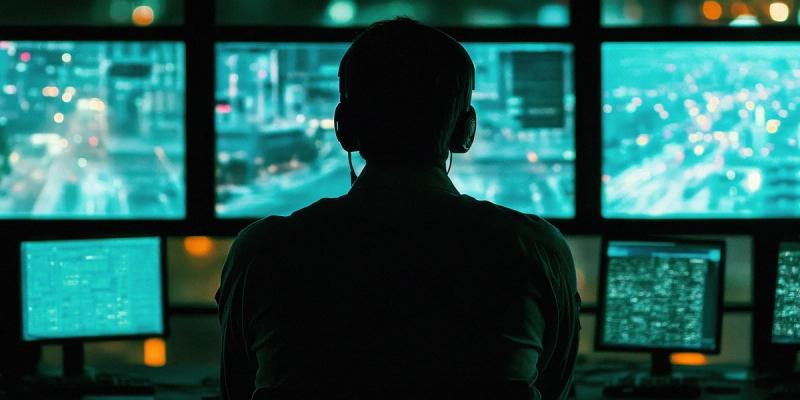
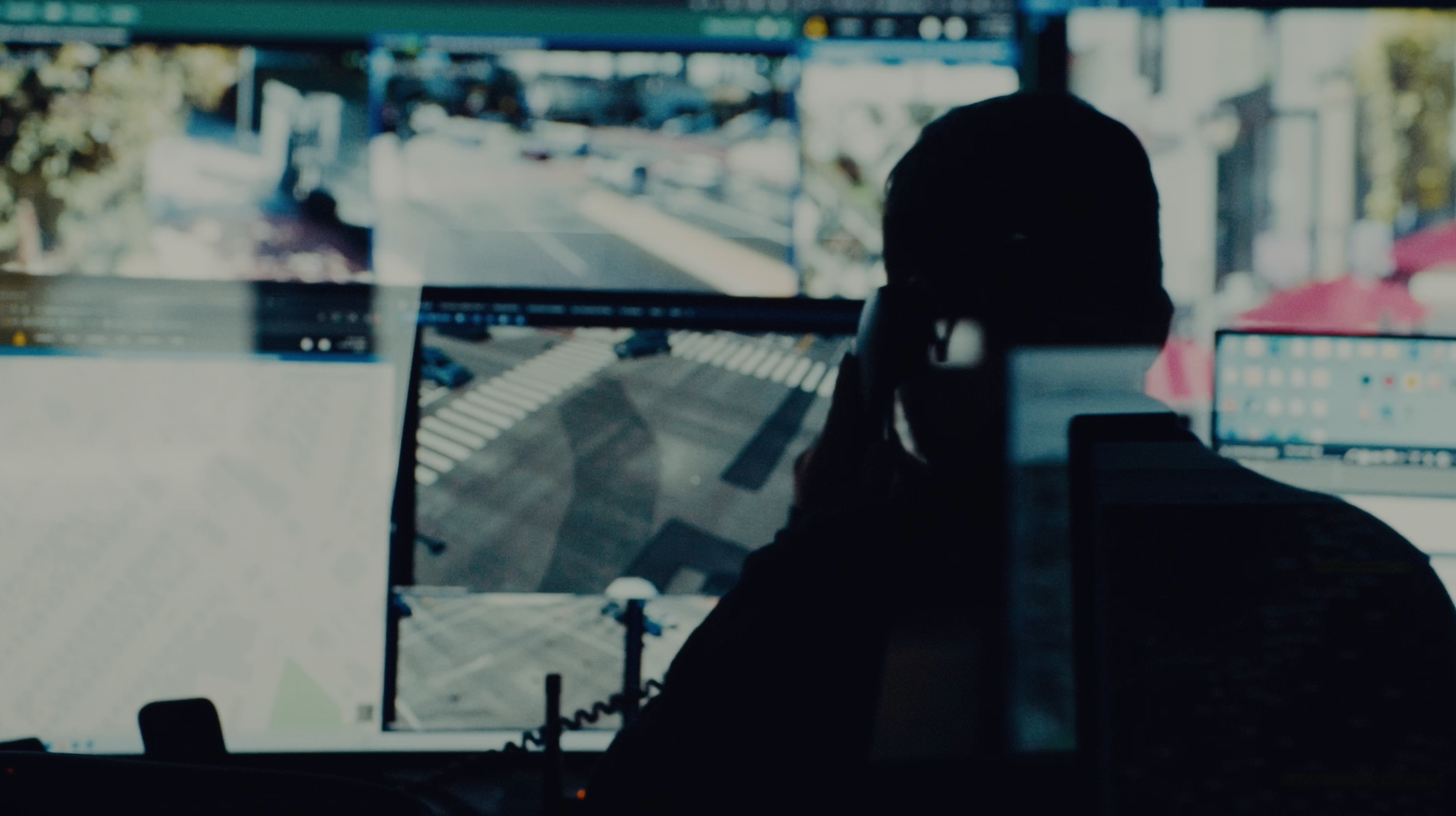
RTICs commonly channel dozens of live data sources, including agency-owned technology and community-owned video feeds. Often, agencies build a standup room with several screens to display multiple inputs simultaneously. RTIC staff — such as dispatch, sworn officers, and civilian analysts — leverage information from 911 calls, video feeds, external data sources, and their agency’s computer-aided dispatch (CAD) and records management systems (RMS).
With so many separate data sources, RTICs need highly trained staff and connective technology. Leaders should establish standard operating procedures that define clear roles and lines of communication. Agencies can also improve their RTIC operations by investing in data integration technology that unifies their internal and external data sources. This enables RTIC personnel to find contextualized insights with one search, in seconds, and quickly share that information with field officers.
READ MORE → Building an effective real-time crime center: Tips, tools, and best practices from Texas experts
No two RTICs are identical; each agency designs its real-time operations around budget and staffing limitations. Agencies with more resources might build a new, standalone RTIC in a separate command center. Some RTICs are housed in a police department’s building, whether in a separate room or integrated into the agency’s operation. Some smaller agencies are getting creative by utilizing mobile RTICs that leverage drone technology.
As of February 2026, there are an estimated 231 real-time operations centers in the U.S., according to the Electronic Frontier Foundation (EFF). In 2023, the EFF reported just 135 RTICs, indicating a rapid spread throughout the country.
READ MORE → 6 tips on building the best RTCC for your agency
Police agencies across the U.S. are investing in real-time information centers to optimize their operations, speed up investigations, and keep their officers safer. The most effective RTCCs rely on powerful integration platforms like Peregrine to contextualize dozens of real-time inputs alongside an agency’s internal data. Peregrine supports real-time operations through data unification, analysis, and visualization, complete with secure data sharing capabilities. To learn how Peregrine provides the essential foundation for your agency’s RTIC, schedule a demo.
A real-time information center is a centralized hub that helps police agencies respond quickly and effectively to crimes. An RTIC brings together dozens of real-time intelligence inputs, such as CCTV and video security systems, BWC footage, and LPR systems.
For media requests,
contact media@peregrine.io
 Your Privacy Choices