The Fire-Rescue Data Playbook: A practical guide to fire department data integration
Free guide to fire department data integration: connect CAD, RMS, ePCR, and GIS for CFAI accreditation, coverage planning, budgets, EMS, and wellness.
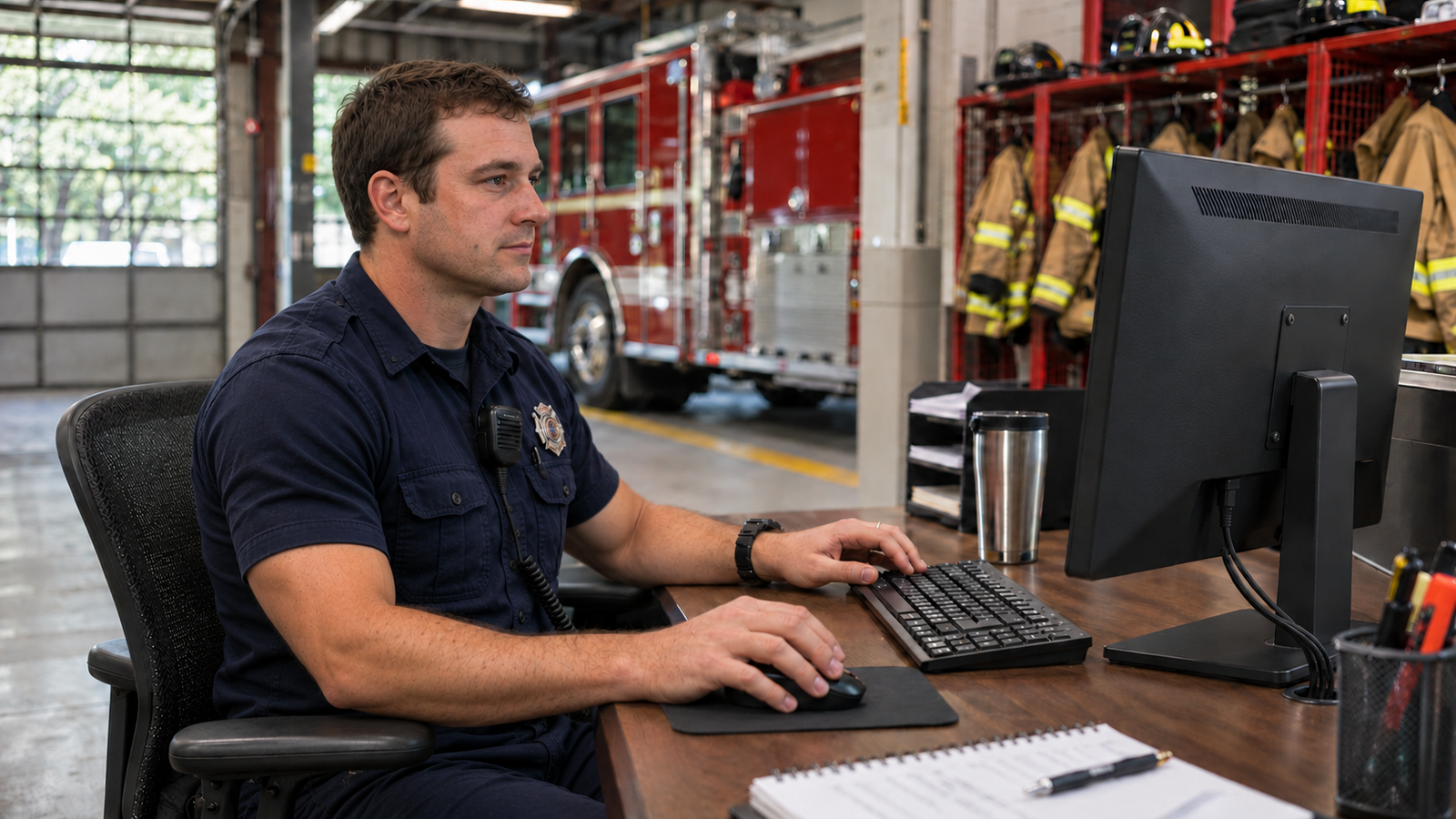
A fire department's data drives every decision that shapes how well a community is protected: where a station sits, how quickly a unit arrives, which member is approaching a health crisis, and whether a budget request reflects documented need. Most departments hold that data across seven or eight systems, including CAD, RMS, GIS, ePCR, billing, and training records. None of those systems were built to share information with the others.
The Fire-Rescue Data Playbook gives fire chiefs, EMS directors, accreditation managers, and analysts a worksheet, scorecard, or template for each of those problems. Every exercise runs on the people and systems your department has today. Download the playbook to learn:
- How to run a fire department data inventory that lists every system, its owner, and who else can search it
- How to map CFAI performance indicators and ISO PPC categories to the data that already holds the answer
- How to use drive-time modeling and apparatus burn rate to defend a station closure, brownout, or replacement decision before the vote
- How to build a one-page budget narrative and AFG and SAFER grant evidence from joined CAD, RMS, and staffing data
- How to integrate ePCR, EMS billing, and CAD data, and what changes between fire-based and third-service EMS
- How to track firefighter and EMS wellness data as protection and early support for the people doing the work
- How to score your department's data readiness and sequence the work, starting with the system closest to your community's most urgent need