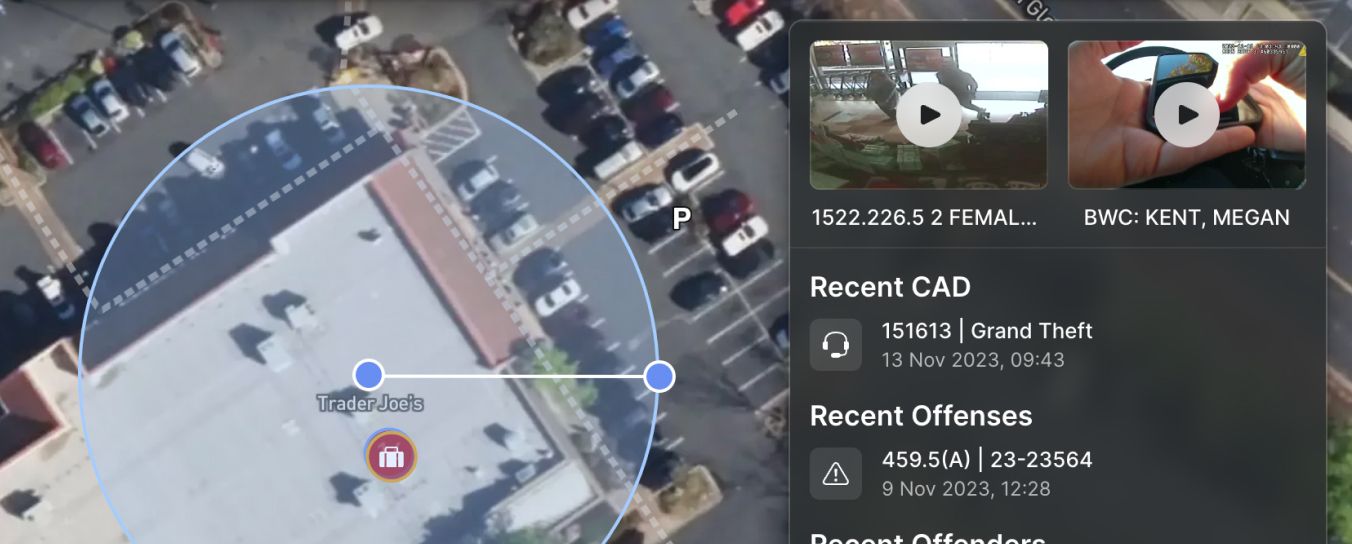
Peregrine is an operational intelligence platform that serves as the data unification layer for real-time information centers (RTICs). It ingests and normalizes live feeds from LPR networks, CAD systems, RMS platforms, body-worn cameras, 911 call logs, and more into a single dispatch and analyst interface. RTICs powered by Peregrine are able to respond faster and with better context through real-time incident and response mapping and natural language search across their data feeds, without replacing existing infrastructure. It reduces analyst screen-switching and increasing pattern detection speed.
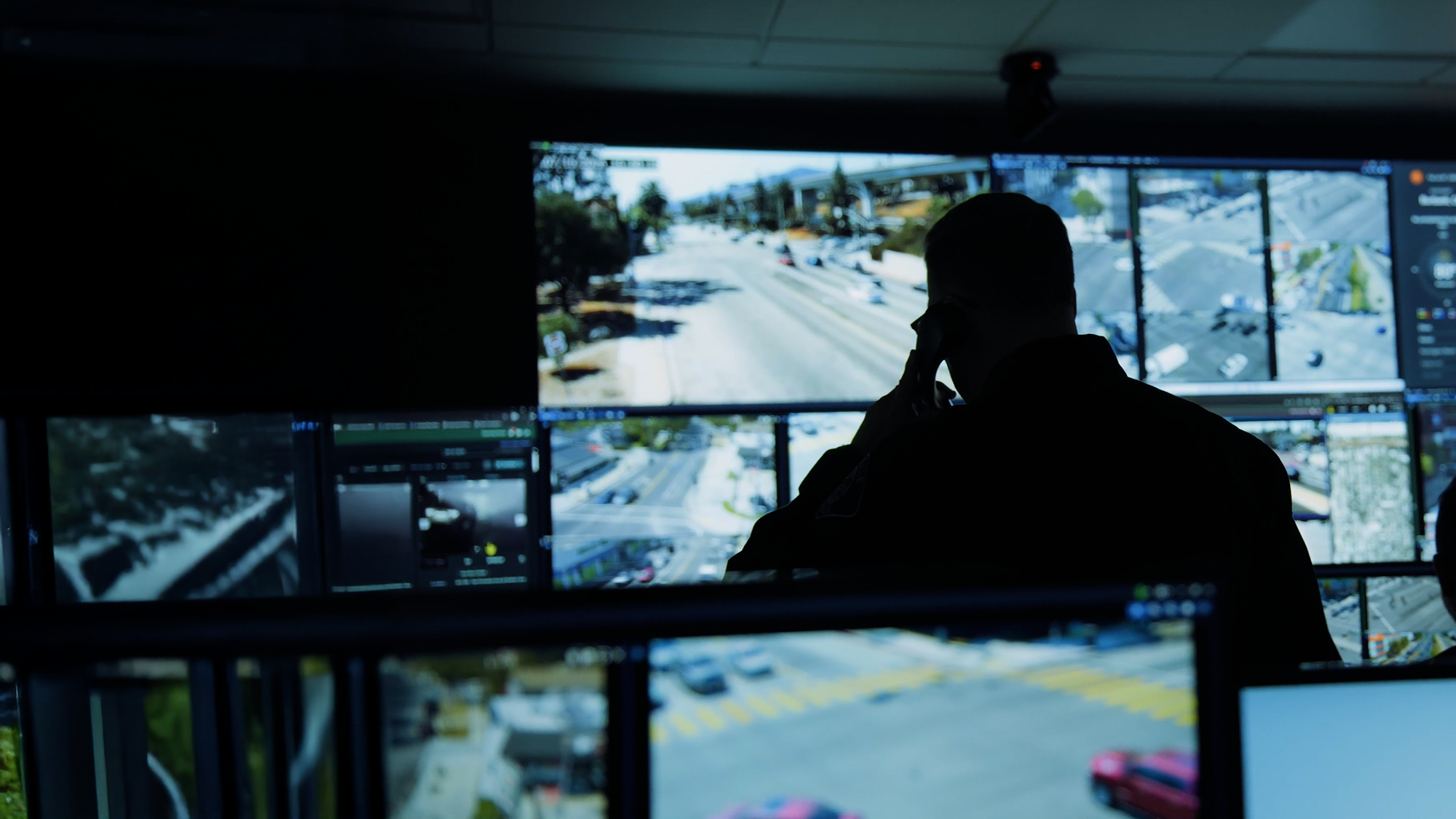
 Use case: The real-time information center platform
One operational picture with every source in your RTIC.
Peregrine unifies CAD, RMS, body-worn camera, LPR, and 911 data into a single analyst interface. Deliver faster responses, improve case closure rates, and better support officers in the field.
RTICs have the data. Most don't have a unified way to use it.
Analysts work across too many screens
CAD feeds, body-worn camera systems, LPR maps, and RMS must often be searched separately, in separate interfaces. Critical connections are missed because there are too many sources to make quick sense of.
The data is there — the intelligence isn't
High-volume data environments generate patterns. But surfacing those patterns requires cross-source analysis that can't happen in real time when analysts are navigating separate systems or dense data environments.
New feeds create new integration burdens
RTIC analysts get a unified operational picture from Peregrine: one interface pulling live data from CAD, RMS, LPR networks, body-worn cameras, and 911 call logs. Instead of toggling between vendor screens, analysts work from a single cross-source view. Connections between incidents surface in real time, with historical data from agency systems to contextualize what’s unfolding in the moment and make more informed decisions. Peregrine connects to existing infrastructure with no rip-and-replace required. Access is granular and role-based: every analyst sees exactly what they're authorized for, nothing more.
how it works
Built for every level of your real-time operations
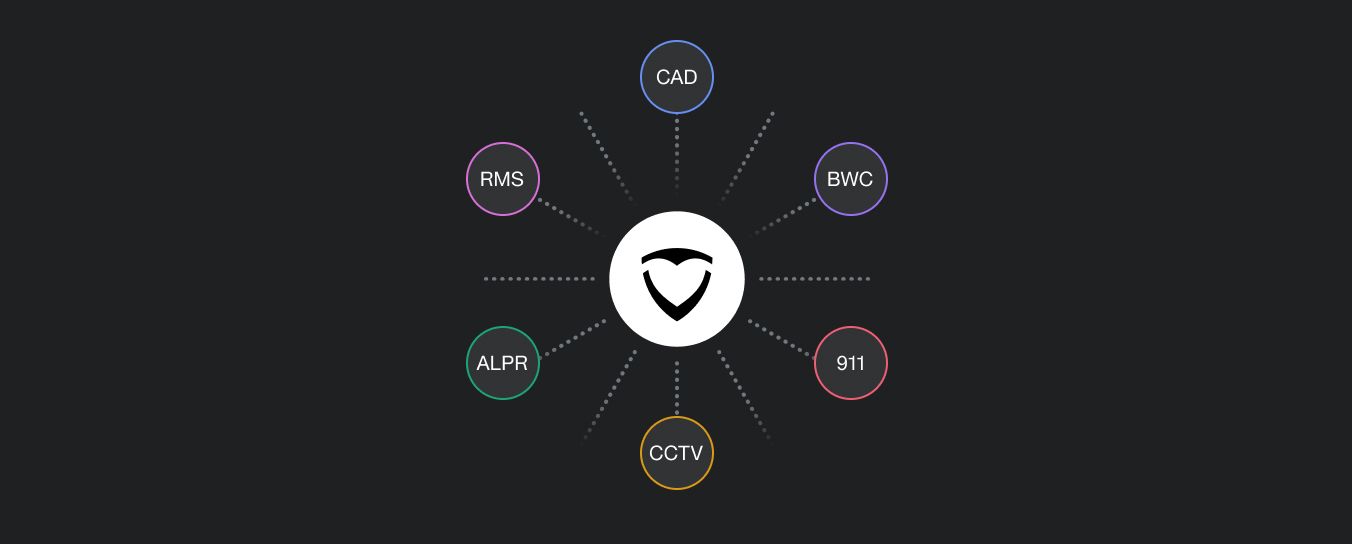
Connect your critical data sources
Peregrine can ingest data from dozens of the most widely used platforms across the law enforcement ecosystem — LPR networks, CAD systems, RMS, and BWC — with no custom middleware required. As long as your agency can provision access to it, we’ll integrate it.
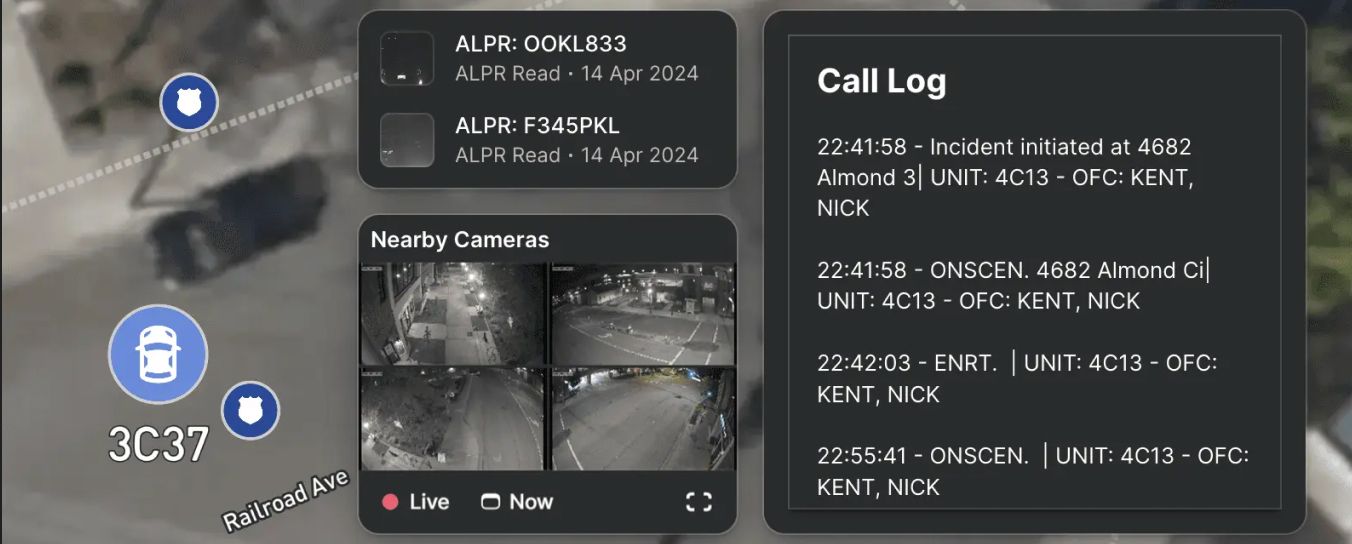
One live operational view
CAD calls, LPR hits, active incidents, and historical patterns are visible in a single interface. Analysts can see what's happening now and how it’s connected to historical data and location-specific context — without tabs or toggles — to direct resources more effectively.
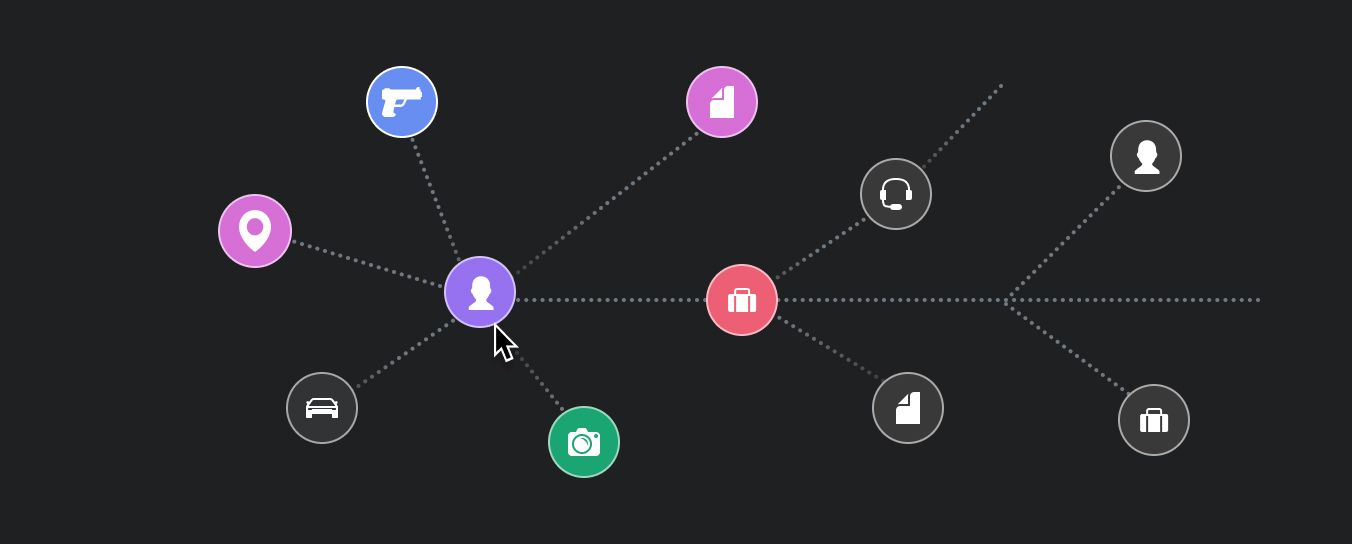
Seamlessly identify connections and patterns
Connect a gun to an incident to a person to a known location, across all integrated systems simultaneously. Patterns that span data sources surface automatically without manual correlation.
Glendale Police Department
Glendale PD built its RTIC from the ground up in under a year. Operators needed instant access to cross-source data — premise history, body-worn camera footage, criminal history, related subjects — without jumping between systems.
“My operators can click on one button and bring up premise history — 30, 60, 90 days — who’s related to the residence, all the body-worn camera evidence that’s ever been taken in that geographic location, criminal history, you name it. And they’re able to feed that to the officers almost immediately. ”
Lt. Sean Riley, Glendale Police Department
 Learn more
Related resources
 Expert voices
Building an effective real-time crime center: Tips, tools, and best practices from Texas experts
Practitioners from Pasadena, Fort Worth, and Amarillo on how they built their RTICs, made the case for funding, and turned data integration into a force multiplier.
Read Article
How to build an RTCC: A guide for agencies of all sizes
Crime doesn't follow jurisdictional lines. How a unified data layer makes it possible for RTICs to share real-time intelligence across agencies — and why that changes the speed and outcome of investigations.
Read- Guide
How to build an RTCC: A guide for agencies of all sizes
The systems, integrations, and operational design decisions that separate high-performing RTICs from ones that struggle with data fragmentation.
Read
Frequently asked questions
What is a Real Time Information Center (RTIC)?
A real-time information center (RTIC) is a centralized operations hub where analysts and commanders access live data feeds from multiple law enforcement systems to support active investigations and patrol operations. RTICs typically integrate camera networks, license plate readers, CAD, and RMS data, as well as additional feeds such as 911 calls and emergency operations systems. RTICs are also sometimes referred to as RTCCs, or real-time crime centers.
What technology does an RTIC need?
How hard is it to integrate data feeds for an RTIC?
Does Peregrine replace our existing RMS or CAD infrastructure?
Is Peregrine CJIS-compliant?

Ready to give your RTIC a unified operational picture?
See how Peregrine connects your existing data infrastructure — LPR, CAD, RMS, and more — into a single real-time intelligence interface, accessible to agencies of any size.