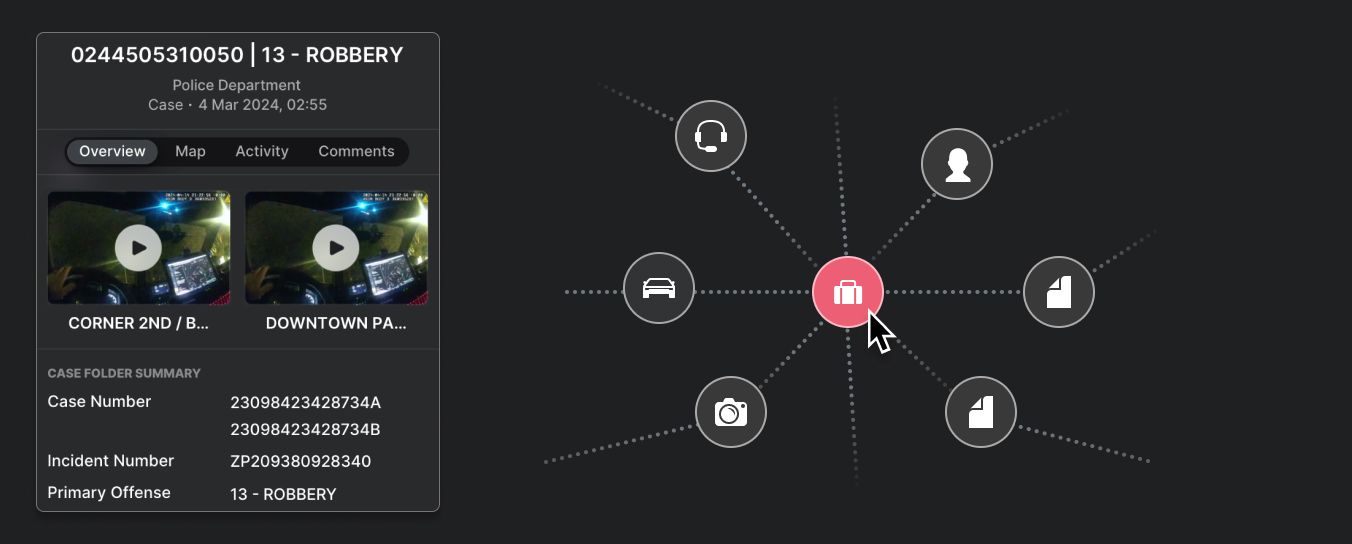
Peregrine delivers pre-scene situational intelligence to patrol officers at the moment of dispatch, assembling relevant prior incidents, known subjects, warrant flags, and location history from CAD, RMS, and other data systems before the officer arrives on scene. Supervisors access a live operational dashboard showing unit deployment and activity across the jurisdiction.

 Use case: Patrol operations
Full context for every officer, before they step out of the car.
Peregrine provides pre-scene intelligence — prior calls, known subjects, warrant flags — so officers arrive prepared, not surprised.
There’s more data available than ever. Officers still enter a scene without the most critical info.
Officers arrive without full context
CAD systems provide basic call information, but warrant history, prior incidents at an address, and known-subject data require separate lookups across RMS, state systems, and other tools — are often accessed after an officer has entered a scene, not before.
Slow search creates delays
Legacy software search is slow and requires specific filtering across multiple fields, potentially in different systems, to get relevant results. Each lookup takes time, and each screen switch is a moment of inattention.
Supervisors can't see what's happening
Patrol commanders have limited real-time visibility into unit deployment, response times, and coverage gaps. Resource allocation decisions are based on experience and radio traffic, not a live operational view.
When a call comes in, pre-scene intelligence can be accessed through Peregrine’s single search bar and queried in natural language. This puts prior incidents at an address, known subjects, warrant flags, and related calls in one quickly-consumable format. Officers step out of the car with context, driving safer and more informed responses.
how it works
How Peregrine gives every officer a better starting point
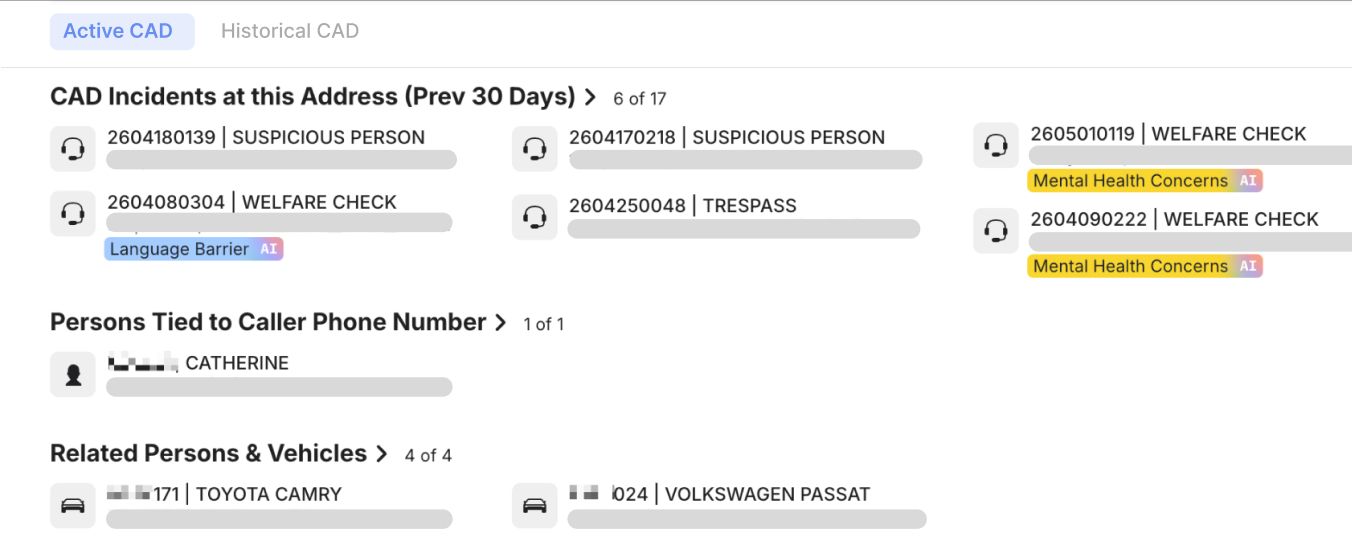
Pre-scene intelligence
Peregrine surfaces unified dossiers with key information the prior call history at an address, known subjects associated with the location, active warrants, and related incidents. Officers get a consolidated picture before arrival.
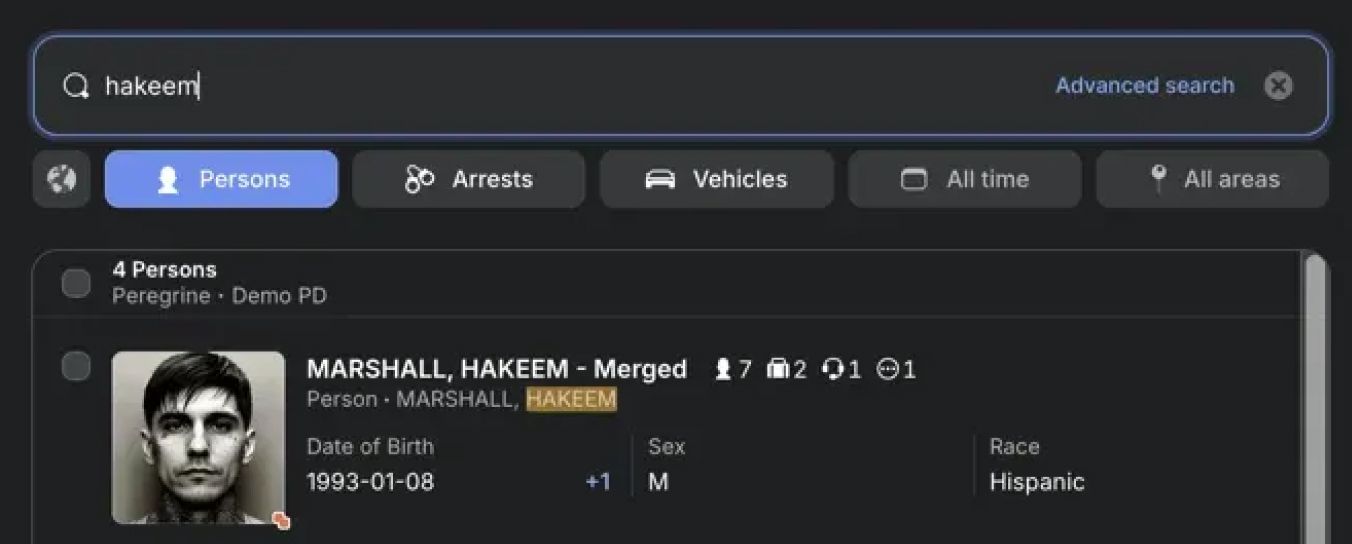
Cross-source lookup in one interface
With Peregrine, searches for information that took thirty minutes on the phone with dispatch now take under a minute. Instead of toggling between CAD, RMS, and warrant systems, officers search across all of them at once through a single natural-language interface, finding what they need in a fraction of the time.
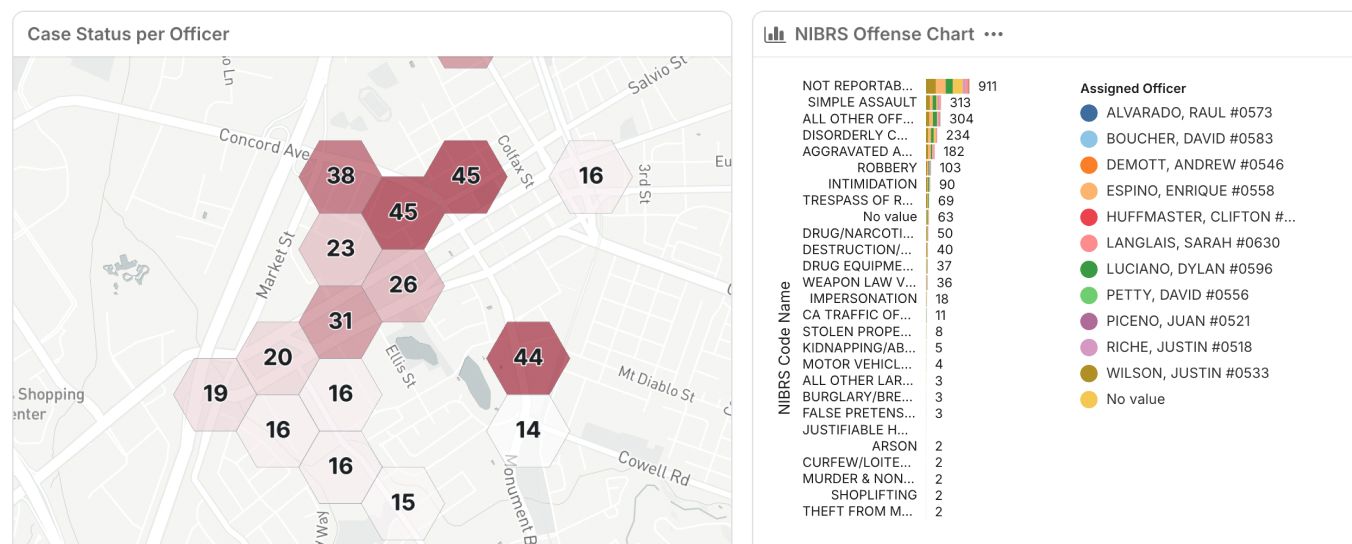
Live supervisor dashboard
Patrol supervisors see a real-time map of unit locations, response assignments, and coverage gaps across their jurisdiction — enabling faster resource allocation decisions based on what's actually happening, not what's on the schedule.
Glendale Police Department, Glendale, CA
The Glendale Police Department Real-Time Intelligence Center (RTIC) uses Peregrine to provide situational awareness to patrol officers to keep them safe and inform their strategy in the field.
“It’s like having a partner. It makes our life a lot easier. My whole unit feels much safer.”
Agent Mitchell Tompkins, Glendale Police Department
Frequently asked questions
What information can officers access through Peregrine before arriving on scene?
Peregrine automatically surfaces prior call history at the address, known subjects associated with the location, active warrant flags, related incidents, and LPR hits — assembled at the moment of dispatch from CAD, RMS, and connected systems.
How does Peregrine integrate with CAD systems?
Does Peregrine replace our existing MDT or CAD system?
How does Peregrine help reduce officer administrative burden?
Can supervisors see real-time unit deployment through Peregrine?
Is Peregrine CJIS-compliant?

Give every officer context before they arrive on scene.
See how Peregrine delivers a pre-scene intelligence brief automatically at dispatch — pulled from CAD, RMS, and other connect systems.