Integrated emergency management
- Unify and display live and historical data
- Mitigate, prepare, respond, and recover all in one place
- Optimize resources and processes, and make faster decisions
Create a safer, more resilient tomorrow
 how it works
The full-stack platform that turns fragmented data into operational impact
Forward deployed engineering
Every organization operates differently. We deploy engineers directly with your team, on site and in the work, to understand your mission, workflows, and realities. We translate those insights into a deployment built for how you operate, from day one.
Data ingestion and enrichment
We securely integrate disconnected data, structured and unstructured, into a common operating environment where records are matched and linked. We prepare, transform and model millions of records to deliver a clean, enriched data foundation that powers outcomes grounded in your operational reality.
Organizational context
We understand how your decisions are made, how work moves, and where constraints exist. That operational logic gets encoded into your Peregrine experience; structuring real-world workflows and decision points across your organization. If you deploy our secure AI, your organizational context ensures it's built for how you function.
Semantic ontology
Our semantic ontology transforms raw data into operational utility. It captures not only entities, events, relationships, but also ways of working that define how you operate. The result: a durable, shared model that aligns systems and teams around a consistent source of truth.
Intuitive interfaces and AI
We surface complete context through purpose-built applications designed for how your teams work: from day-to-day operations to complex analysis and strategic planning. AI is an optional, secure capability that only draws from authorized data, with answers traceable to the source, and built to support human-led decisions and action.
Data governance
Peregrine is built for environments where trust is non-negotiable. We ensure you retain full data ownership, fine-grained access controls, and complete transparency through immutable audit logs and end-to-end data lineage across your systems.
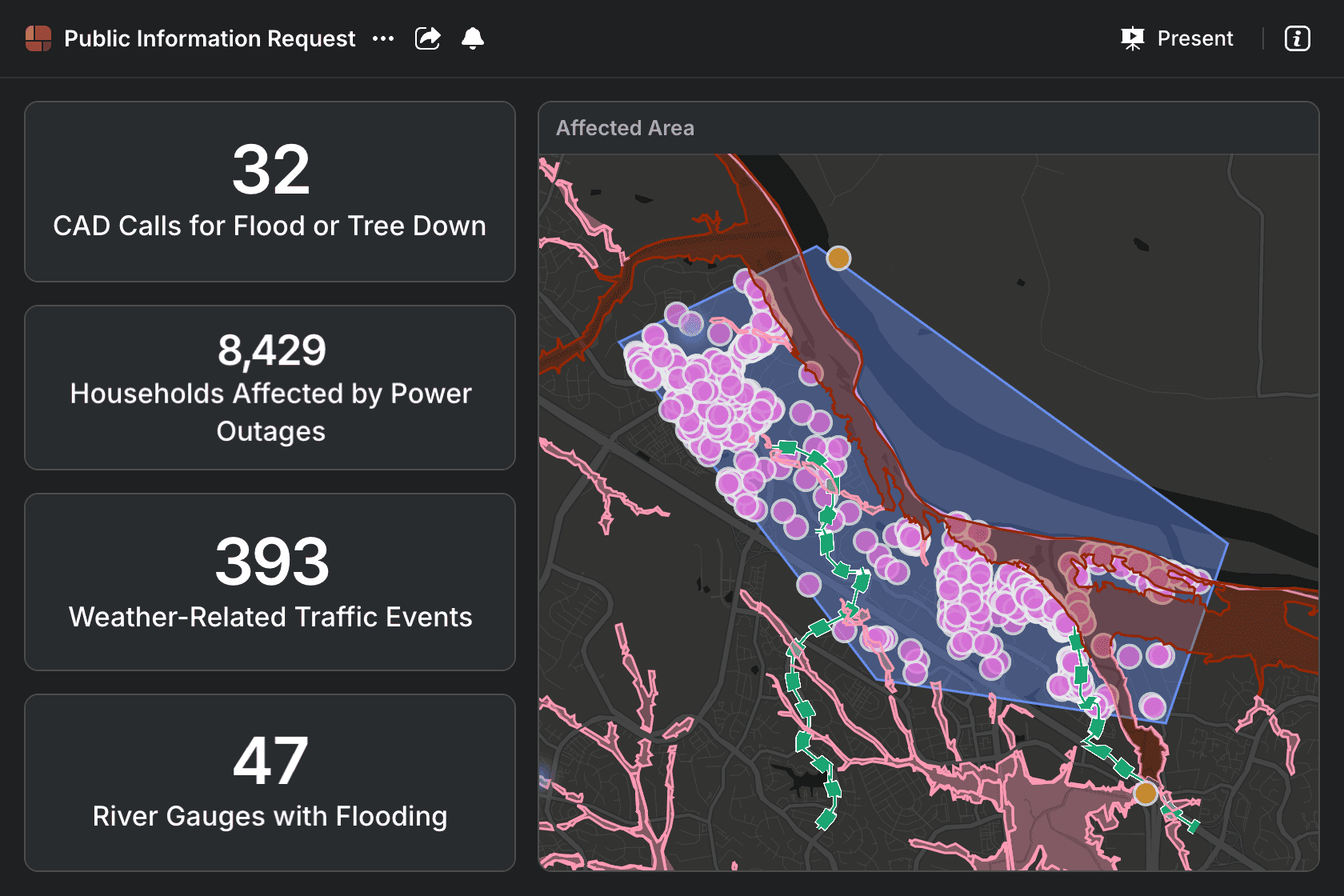
Inform risk mitigation strategies and enhance community resiliency in future emergencies by developing a rich understanding of what has happened and how to improve.
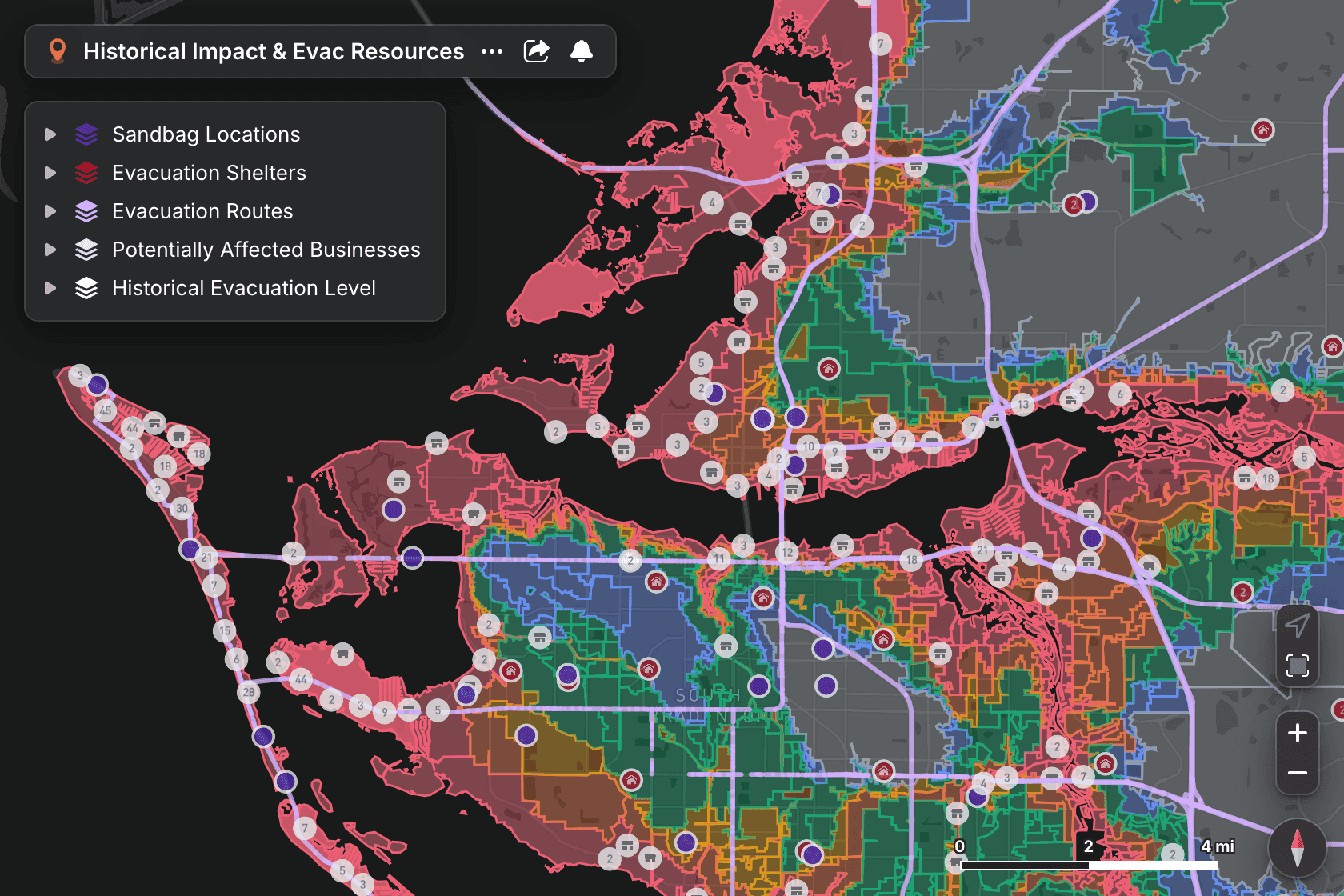
Understand where needs are highest to assure mitigation actions have the greatest impact possible in a community.
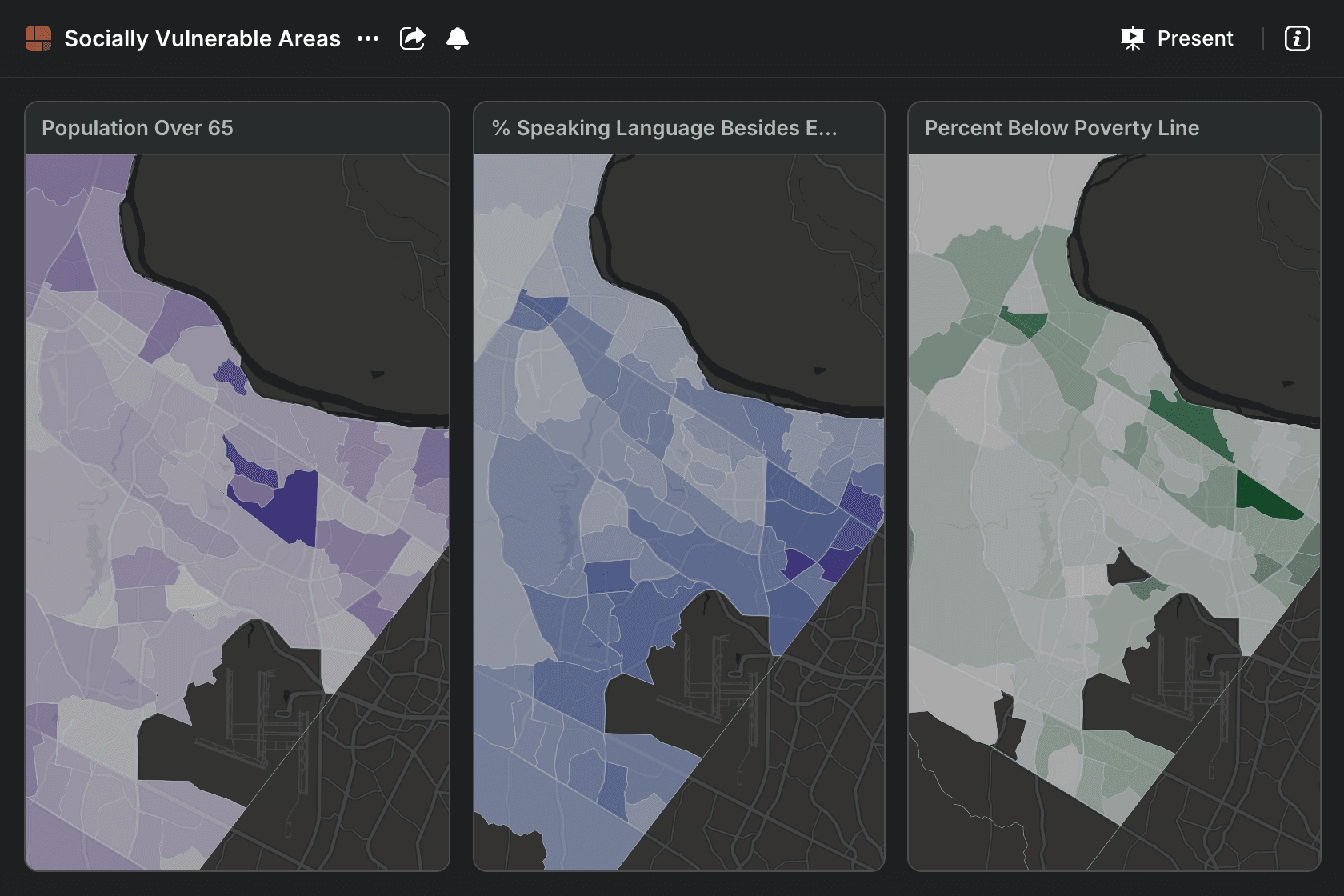
Enable emergency managers to recognize patterns in incidents and response effectiveness to refine protocols, enhance coordination, and improve resource utilization.
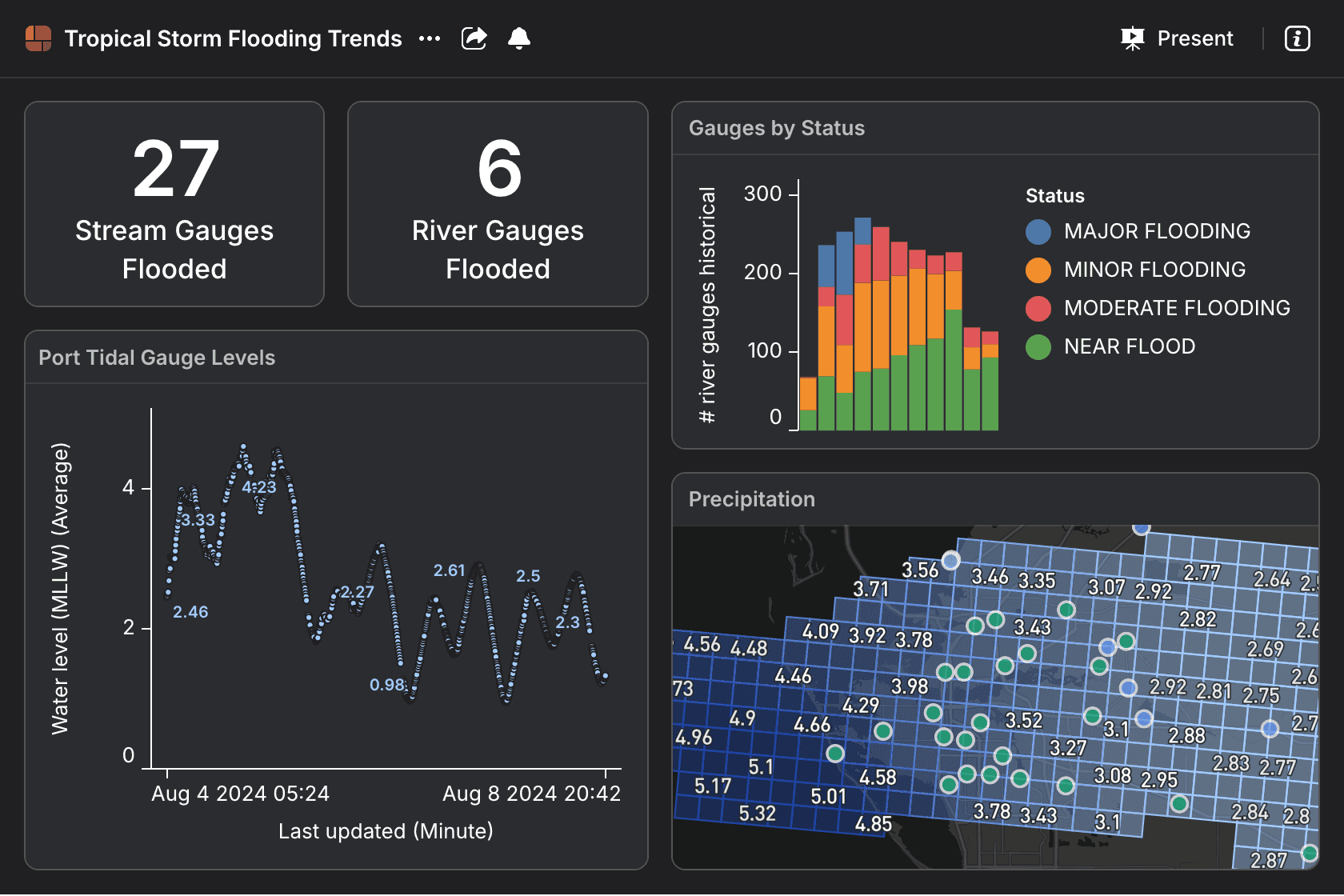
Instantly access categorized data on assets, services, and capabilities to inform decisions regarding the recurring needs of the community and assure readiness of critical societal functions in an emergency.
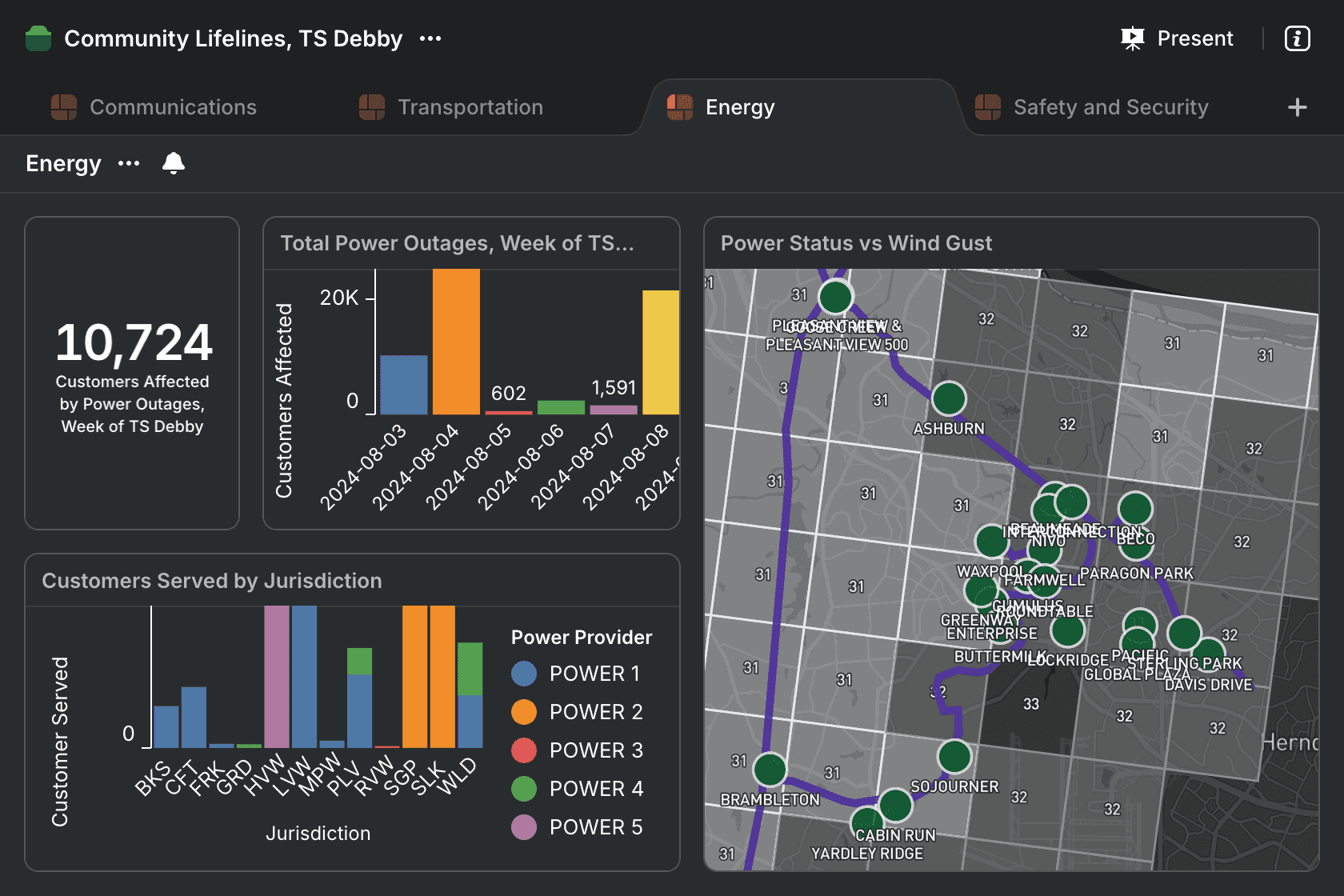
Construct and clearly communicate comprehensive plans across teams, helping to ensure that operations are synchronized and supportive of the IAP’s objectives.
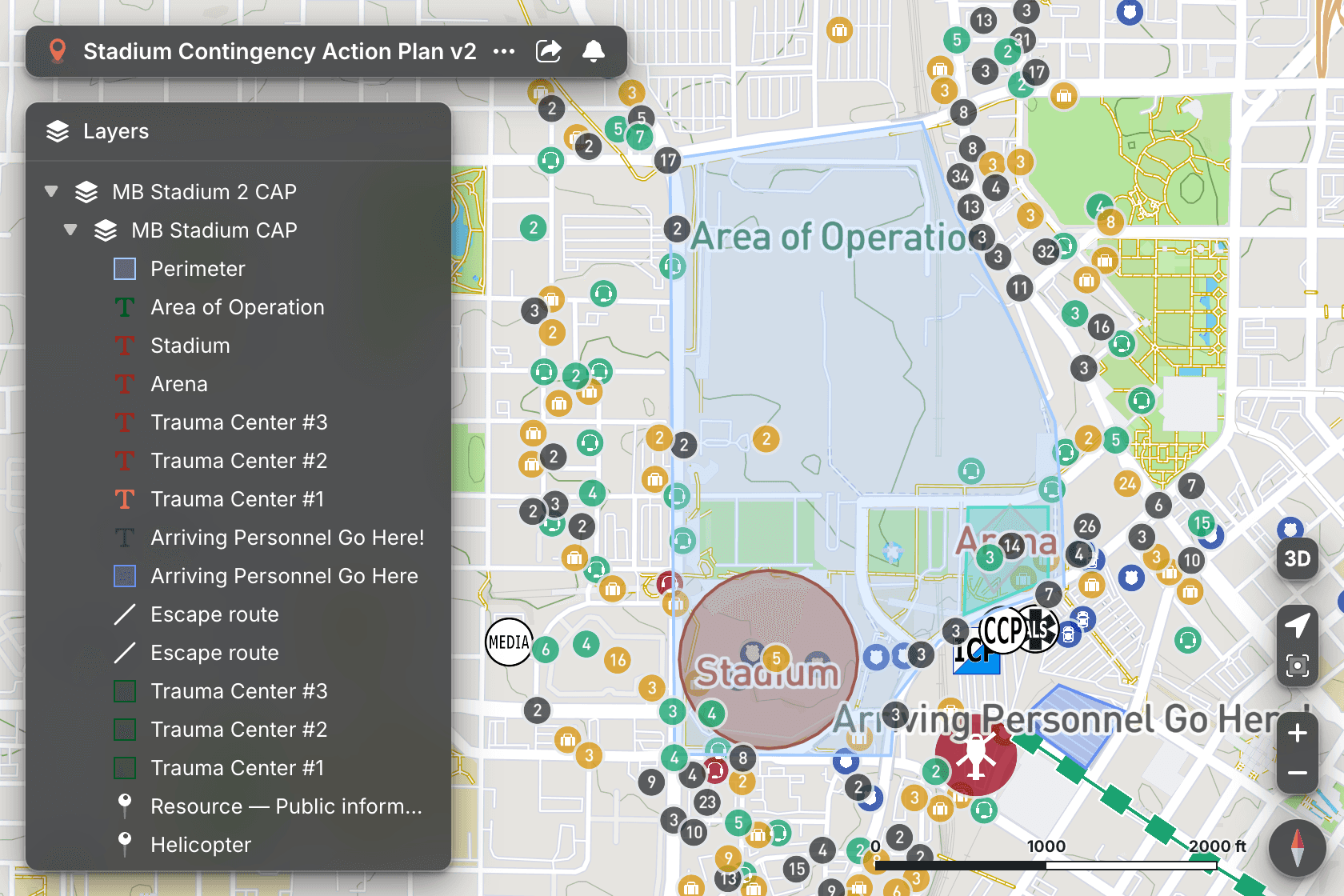
Collaborate across working groups and ensure all stakeholders are prepared for any scenario leveraging comprehensive historical data and robust visualization tools.
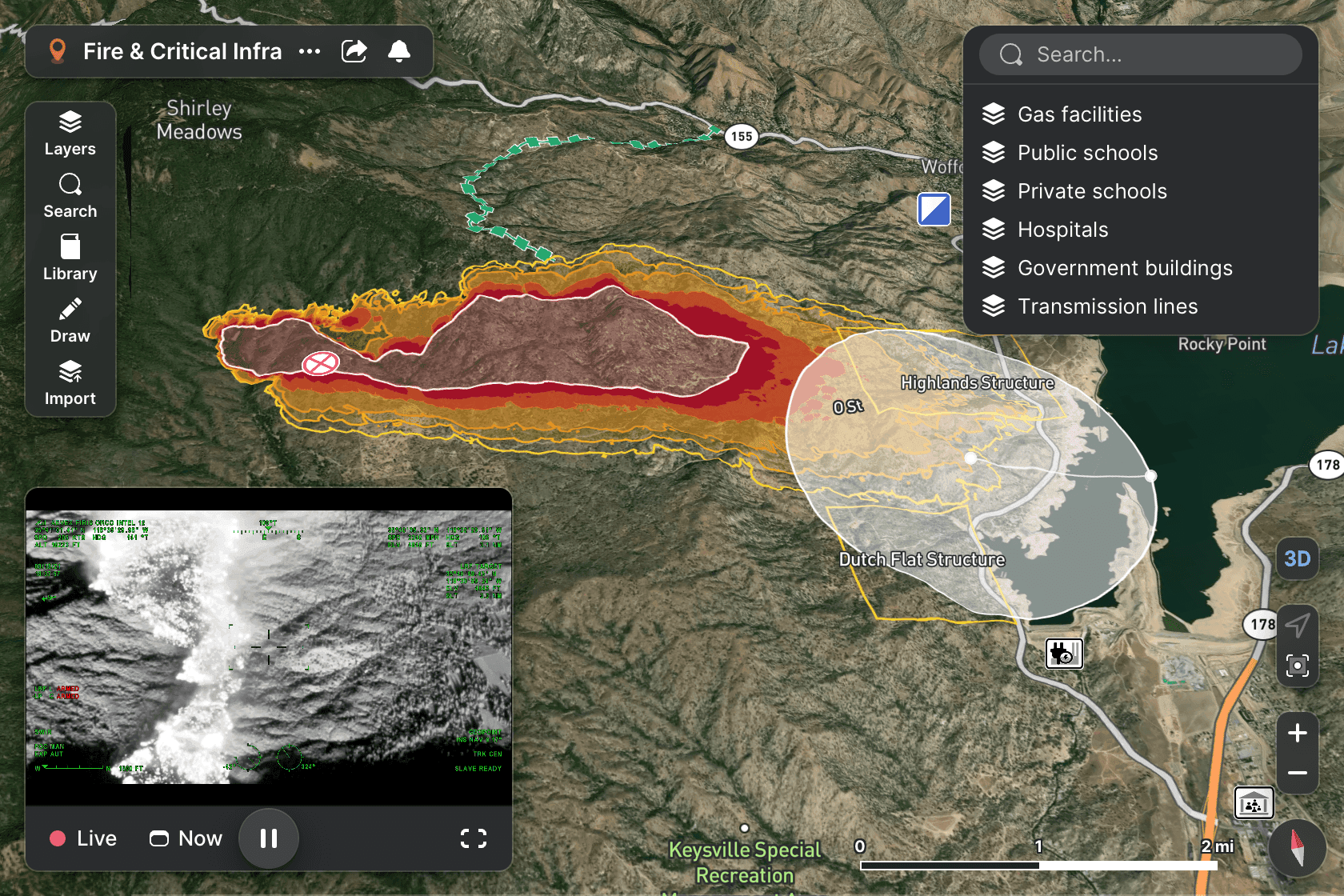
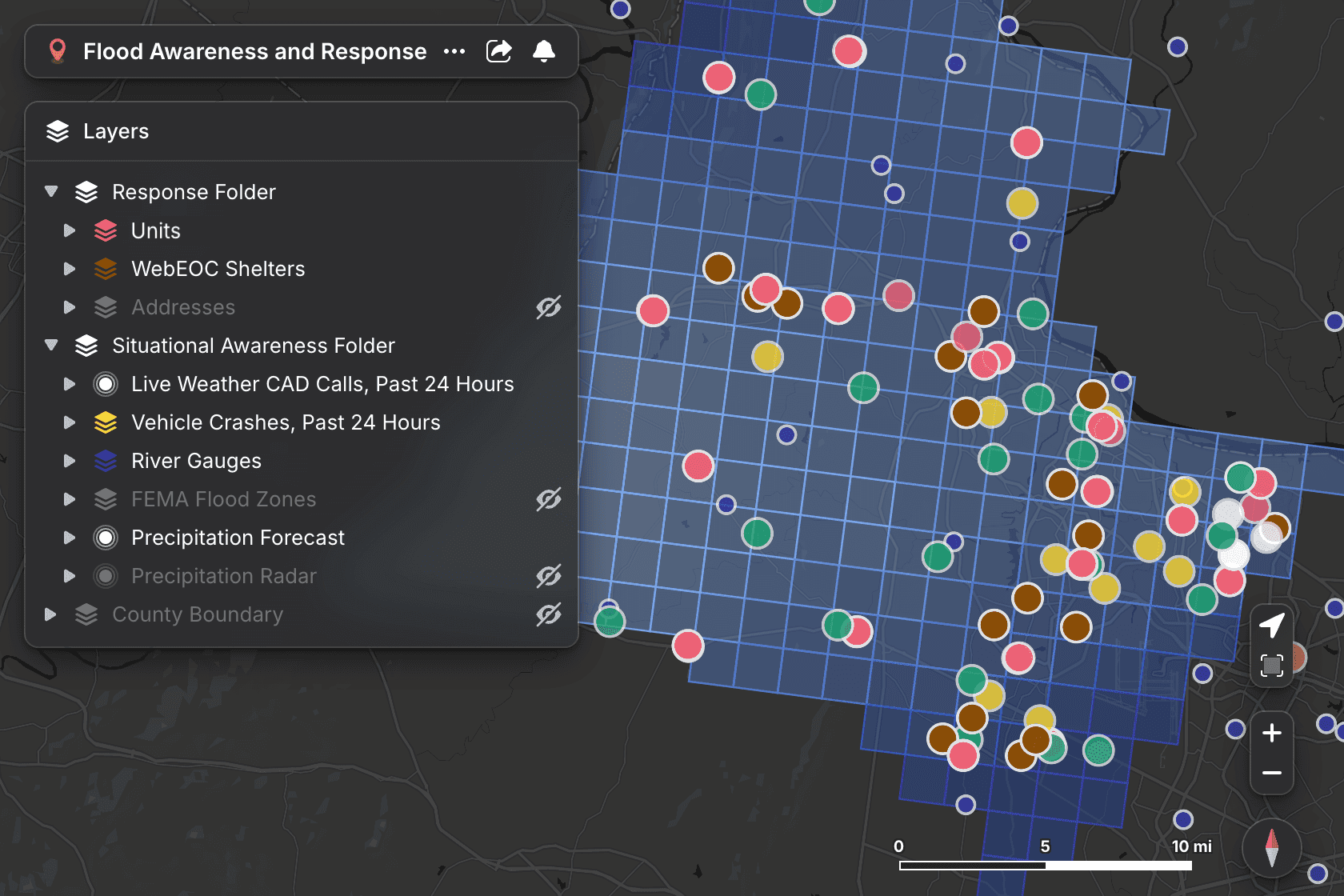
Integrate live and historical data on one platform to enhance cross-functional situational awareness and collaboration between working groups.
Design intuitive and insightful visuals backed by reliable, continuously updating data for highly interactive data visualization and analysis.
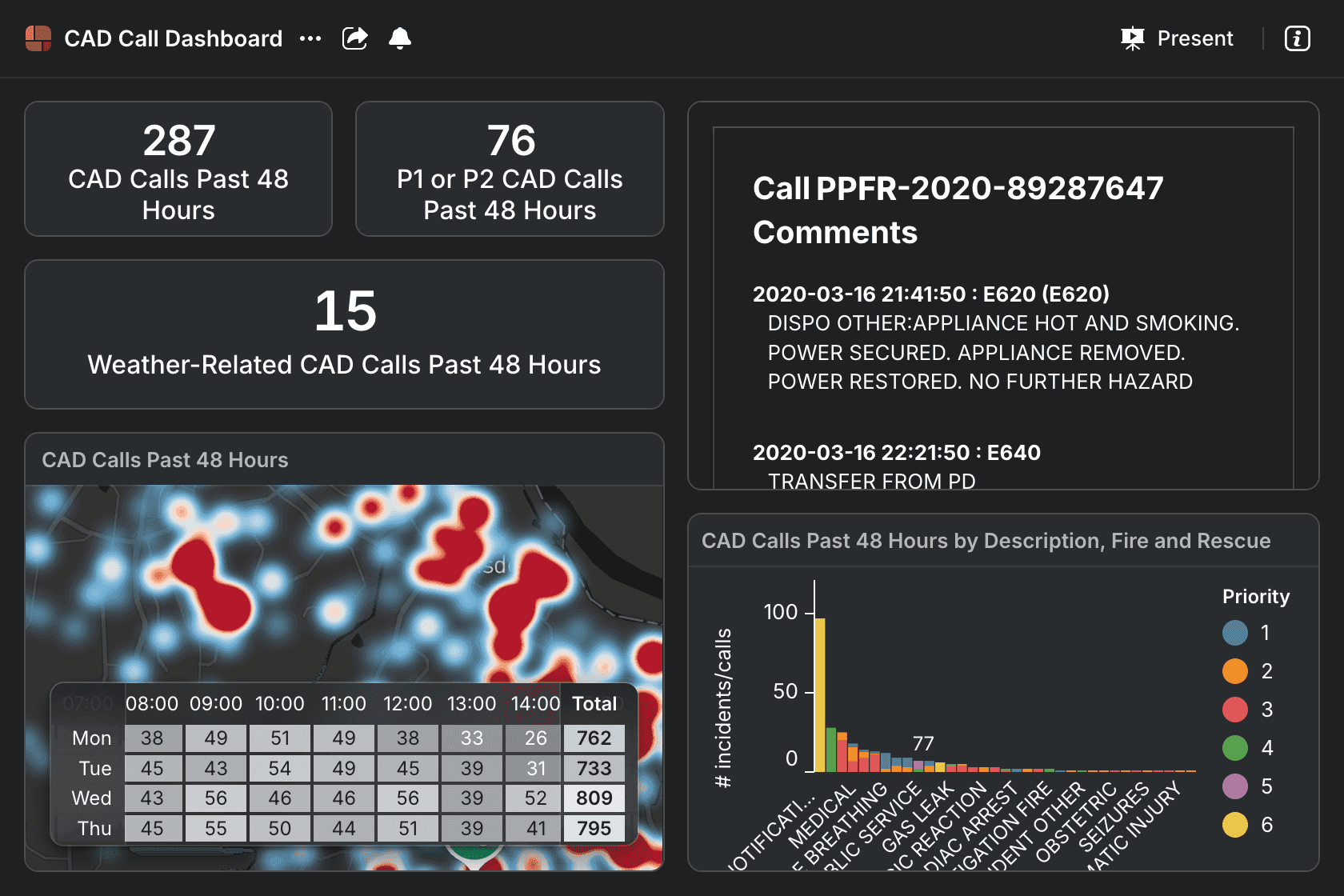
Configure mission-specific alerts as an individual, within teams, or across entire departments to surgically detect changes in your operational picture and stay on top of evolving trends.
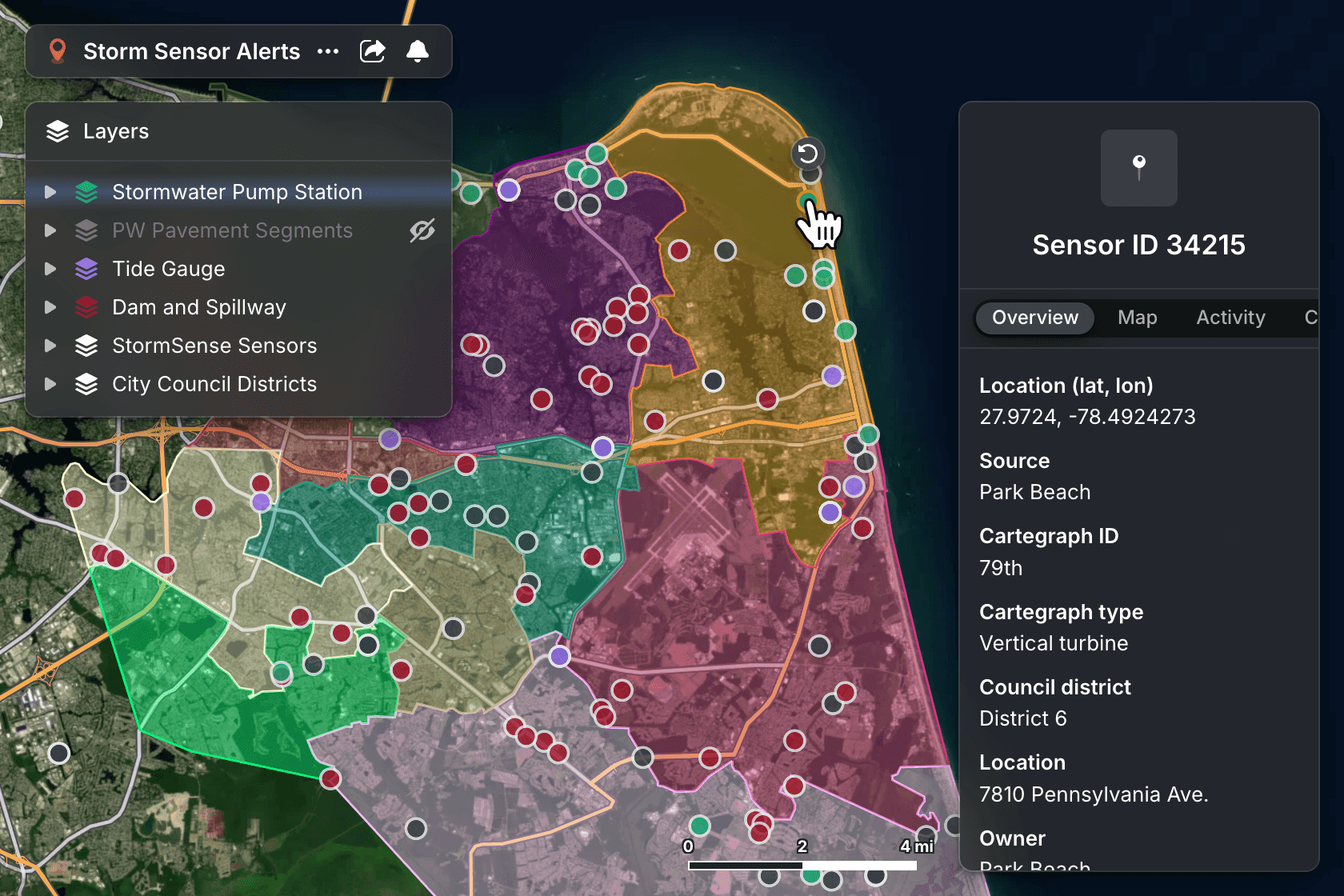
Minimize manual work to understand incident impact by quickly aggregating, organizing, and quantifying data across siloed systems, feeding directly into reimbursement calculations.
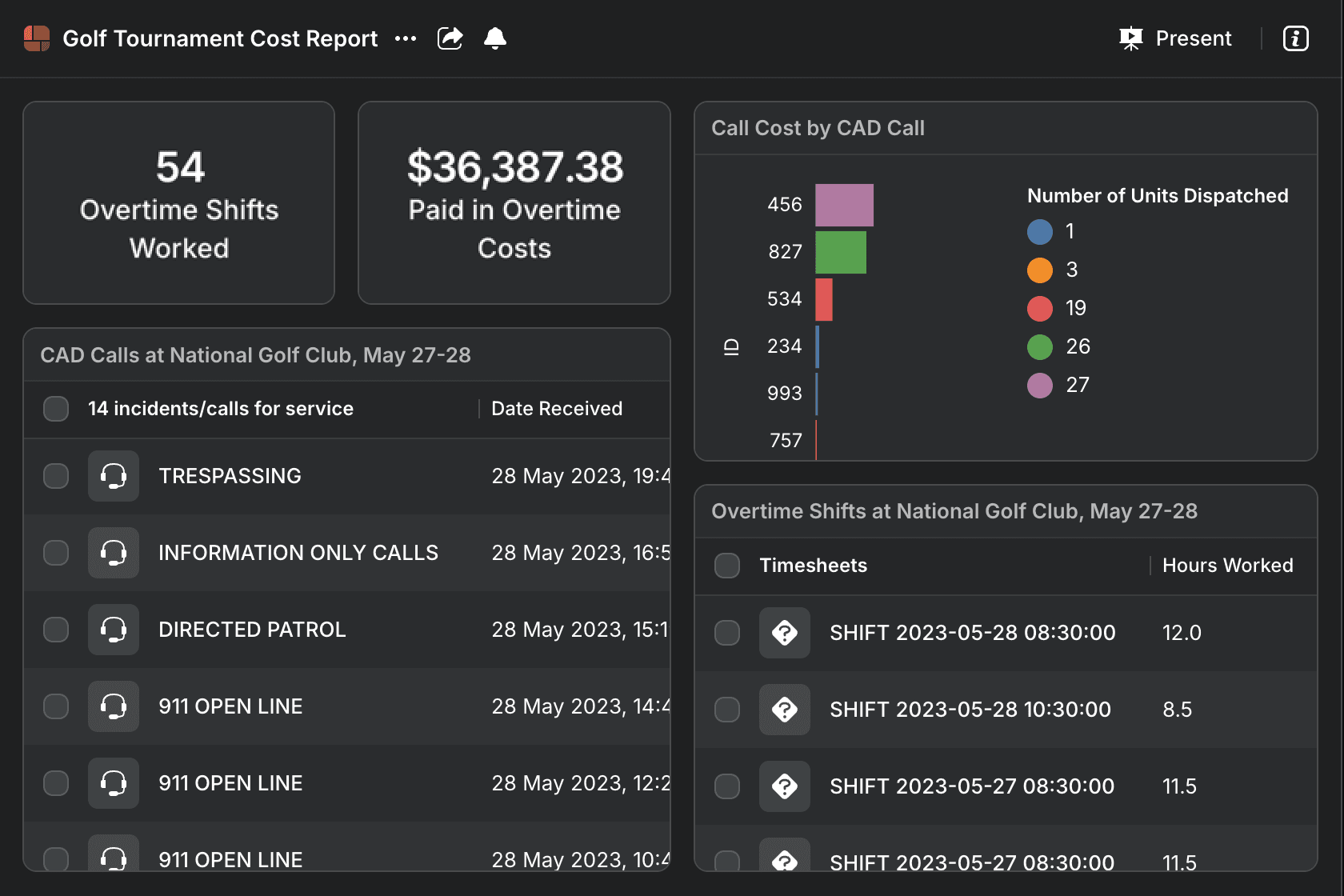
Automatically connect comprehensive datasets to relevant financial data, leading to simplified cost accounting, grant applications, and funding justifications.
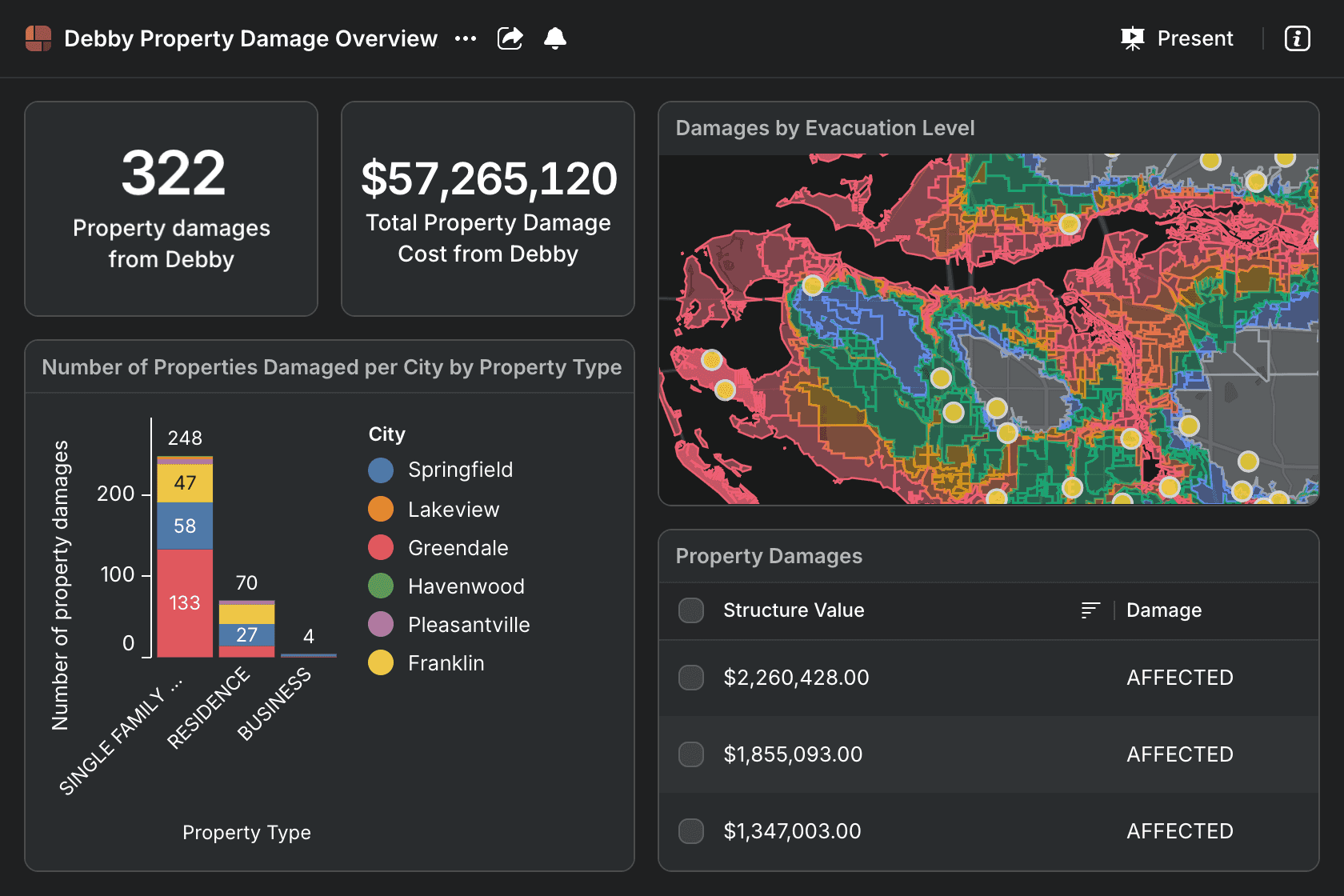
Promote transparency, accountability, and community engagement by sharing preparedness strategies, incident reports of past emergencies and outcomes, and data on response effectiveness.